
What we treat
Lower back and pelvis: low back pain, sciatica, herniated disc and pelvic pain
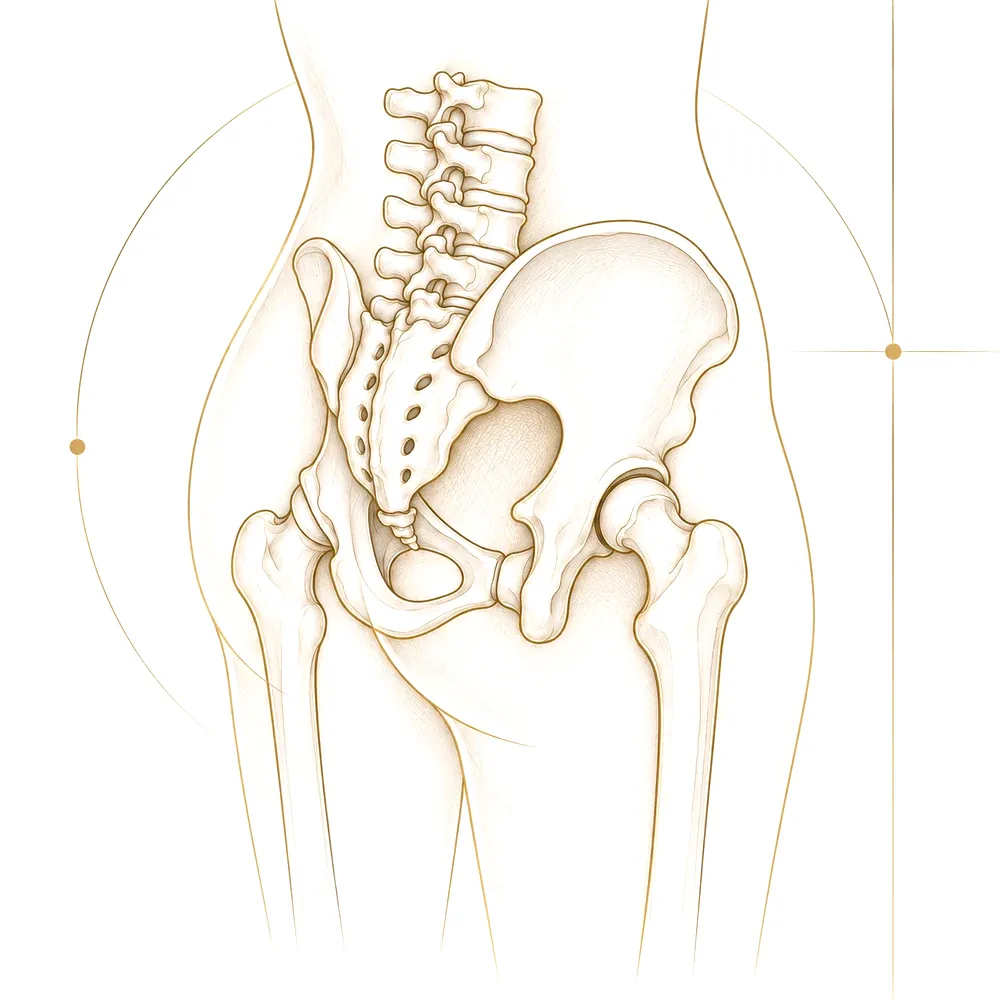
The pelvis is the part of the body that absorbs everything. It receives the forces coming up from the ground, redistributes the loads coming down from the upper body and houses the organs of the lower abdomen. When it locks, pain can appear in the back, the leg or the abdomen. Consultations in Paris 8 and Vitry-sur-Seine.
What we treat
Low back pain, sciatica, pelvic pain: the conditions we treat
This area accounts for the most common reasons for seeing an osteopath. It is also where pain most often keeps coming back, because its origin is rarely where it is felt.
Pain in the lower back

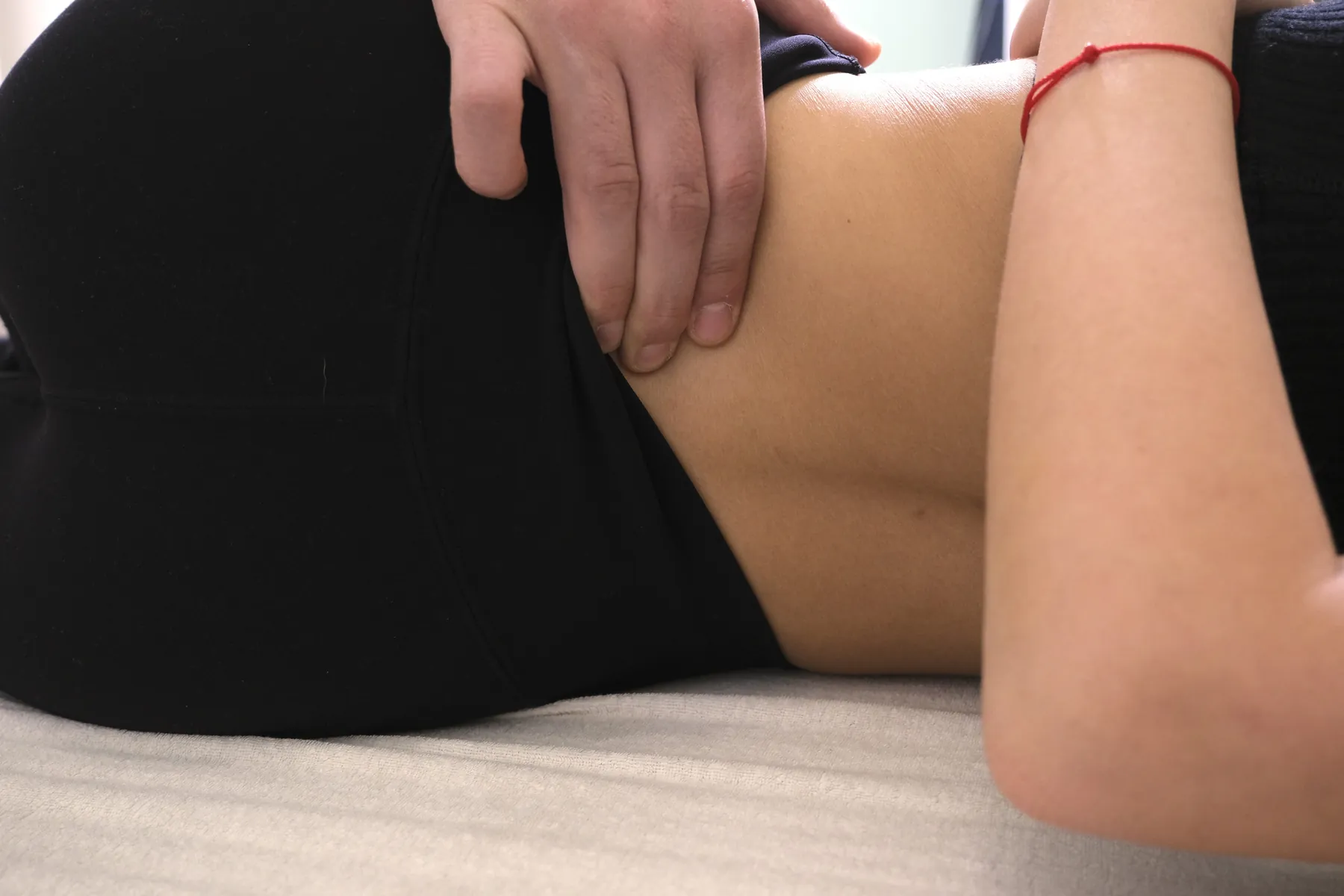
Chronic low back pain.
Lower back pain that has been there for months, eases off and then comes back, often in the same place. Stiffness on waking, pain at the end of the day, discomfort when standing or sitting for long periods.

Lumbago (acute low back pain) and a locked back.
A back that suddenly seizes up after an everyday movement: getting up from a chair, picking something up, turning your upper body. Intense pain that stops you from straightening up.

Sacroiliac pain.
Pain on one side only, in the lower back or the buttock, that flares up when you climb stairs, turn over in bed or put weight on one leg.

Tailbone (coccyx) pain and the after-effects of a fall onto your bottom.
Discomfort when sitting, pain when getting up, sometimes years after the fall. The tailbone is connected to the whole line that runs up to the skull.

Scoliosis and postural imbalances.
One shoulder lower than the other, a pelvis that twists, a leg that seems shorter. These long-standing imbalances put more strain on some areas than on others.
Pain that travels down the leg

Sciatica.
Pain that starts in the buttock and runs down the back of the thigh, sometimes as far as the calf or foot. Tingling, numbness, a feeling like an electric shock.

Femoral nerve pain (cruralgia).
Pain that runs down the front of the thigh, often more intense than sciatica, brought on by standing for a long time.

Piriformis syndrome.
Deep pain in the buttock, worse when sitting, that mimics sciatica without coming from the disc.

Groin pain (pubalgia).
Pain in the pubic bone and groin, common in athletes, that persists despite rest and comes back when you return to sport.
Lower abdomen and pelvic area

Pelvic pain and heaviness in the lower abdomen.
A feeling of weight, pulling or congestion, often worse at the end of the day.

Chronic constipation and sluggish bowels.
Bowels that no longer empty properly, alternating constipation and diarrhoea, irritable bowel syndrome.

Functional urinary problems.
Frequent urges to urinate, a feeling that the bladder does not empty properly, discomfort even though urine tests are normal.

Period pain and support alongside endometriosis care.
Painful periods, cyclical pelvic pain, support for patients receiving medical care for endometriosis.

Recovery after childbirth and pain during pregnancy.
A pelvis that is still painful after the birth, low back pain in late pregnancy, difficulty feeling stable on your feet again.

Heavy legs and venous congestion.
Legs that feel swollen in the evening, circulation that stagnates in the lower body. A swollen leg on one side only, warm or painful, needs to be seen by a doctor without delay.
When a diagnosis has already been made
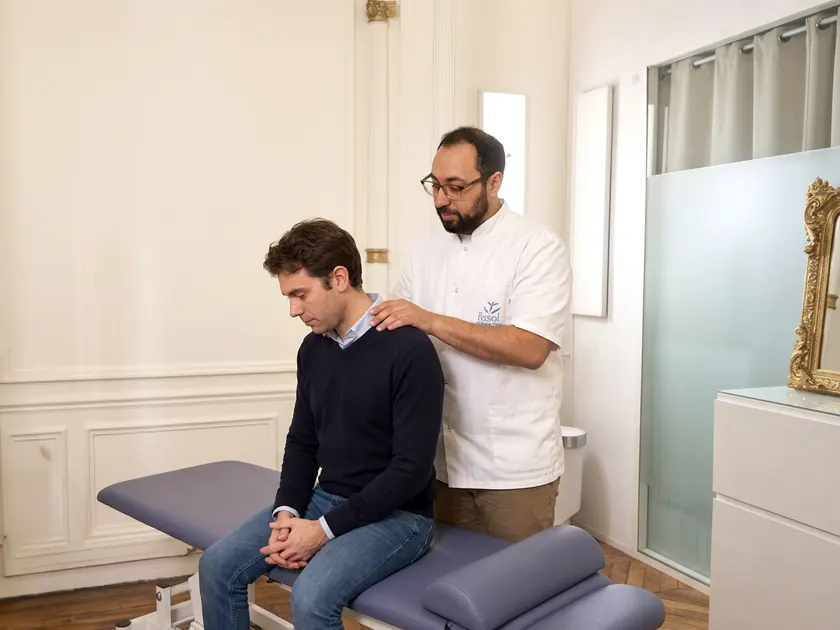
You come to us with a scan and a diagnosis. Our role is to work on the pain and the compensations your body has built around this lesion, and to restore mobility to the areas the lesion has spared.
Herniated disc and disc protrusion.
Degenerative disc disease and disc narrowing.
Vertebral compression fracture.
Lumbar osteoarthritis.
Lumbar spinal stenosis.
Spondylolisthesis.
Why this pain persists
Why your low back pain and sciatica keep coming back
The pelvis does not lie. It carries everything.
It receives the forces rising from the ground with every step, and those coming down from your spine and your organs. Like a transmission belt, it does more than absorb them: it relays and organises them. When it locks on one side, the whole system above and below has to adapt.
Three joints, two lines of force
The pelvis brings together three sets of joints. The sacroiliac joints at the back, which connect the sacrum to the pelvic bones. The pubic symphysis at the front. And the two hips at the sides.
Two major lines of tension run through it. At the back, the thoracolumbar fascia, a wide fibrous sheet that transmits forces between the spine, the pelvis and the legs. At the front, a continuous line connects the breastbone, the diaphragm, the abdominal wall, the pubic bone and the muscles of the inner thighs.
So the pelvis sits at the crossroads of two motorways of tension. That explains why strain picked up elsewhere ends up showing itself there, and why a restriction of the pelvis reverberates through the whole body.
An invisible tilt, consequences everywhere
Your body’s line of gravity passes through the centre of the pelvis. The slightest change in its tilt shifts that centre, and your spine, your knees and the way your feet bear weight compensate at once.
When one side locks, the trunk twists slightly, one shoulder drops, your walk loses its fluidity. You cannot see it, but your body is constantly working to keep its balance. That effort eventually takes its toll somewhere.
As soon as mobility returns, the chain reorganises itself. Breathing deepens, the head lifts, your weight centres itself again. Patients often describe it in the same words: they feel different, without always being able to say why.
The sacrum, a bone that belongs to two structures
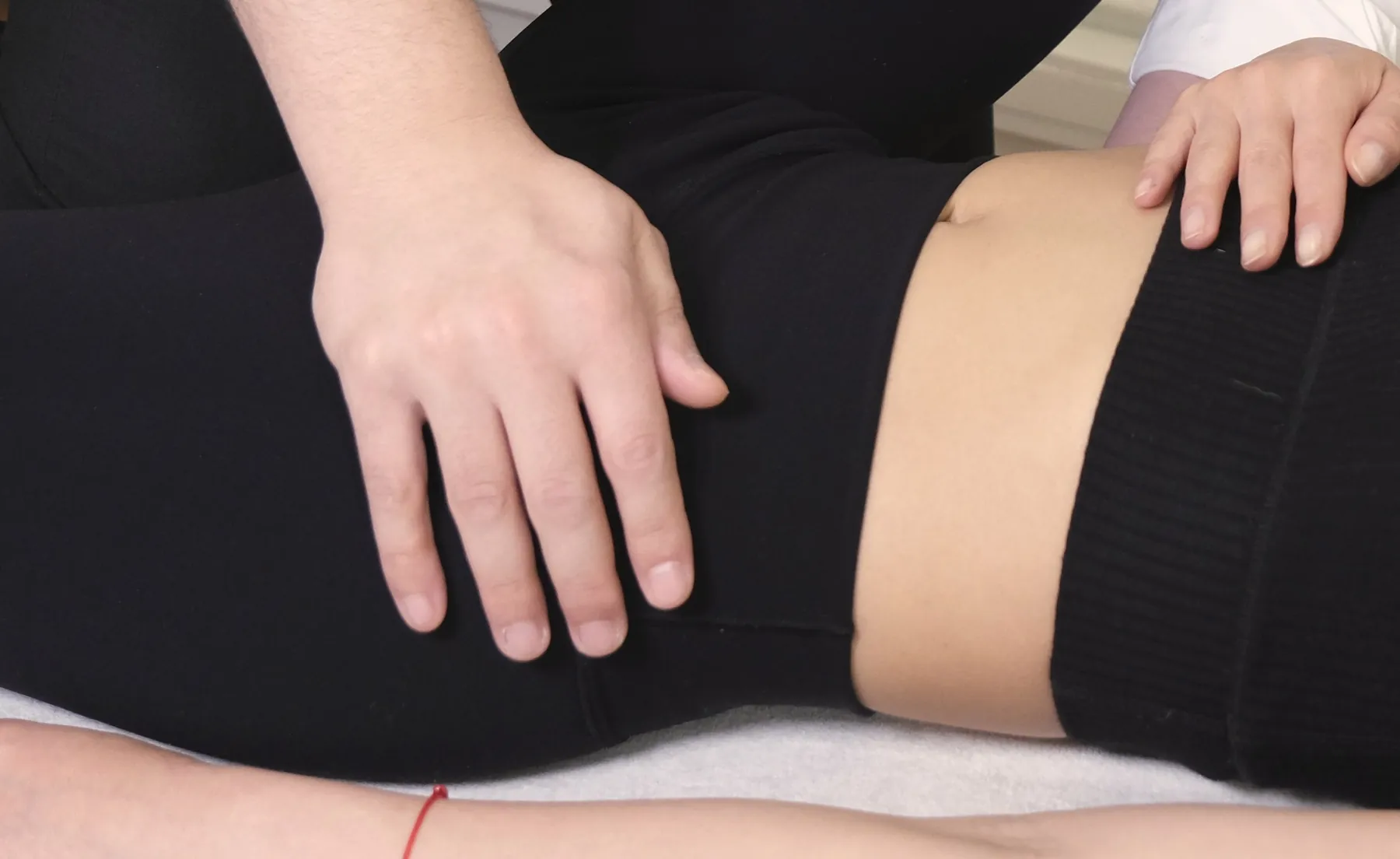
The sacrum belongs as much to the pelvis as to the spine.
At the very bottom, it is the anchor point of the continuous membrane that wraps around the spinal cord and runs up inside the skull. So a restricted sacrum can come with headaches, neck tension or uneven weight-bearing, and the reverse is also true.
That is why we regularly test the upper body when a patient comes in with lower back pain. Sometimes long-standing low back pain only eases once the base of the skull has been released.
The lower abdomen works with the lower back
In front of the sacrum lies the main nerve relay of the pelvis, the one that controls the movements of the bowel, the bladder and the reproductive organs. Strain that has settled in the lower pelvis keeps these organs under constant tension.
In our consultations, the same story comes up again and again. A patient comes in for their lower back. As we dig into their history, we find bowels that have been irregular for years, painful periods, or a heaviness in the lower abdomen that they had come to think of as normal. These are all part of the same picture.
The pelvis also houses the large blood vessels that supply the legs, and a high concentration of lymphatic channels. When it loses mobility, this circulation slows down. Hence heavy legs at the end of the day and congestion in the lower abdomen.
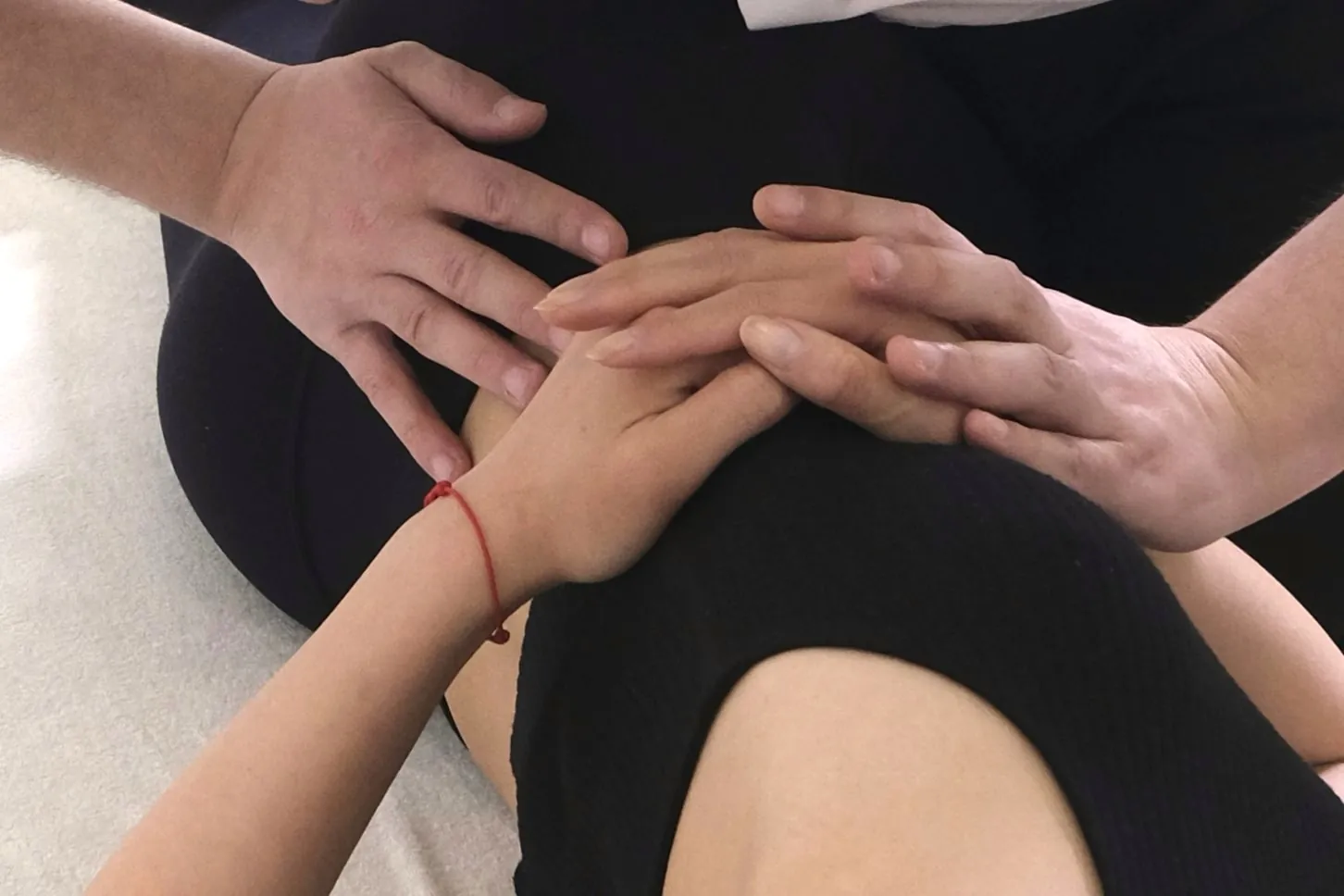
Stress settles here too
Under prolonged stress, the pelvic floor tightens by reflex, just as the jaw clenches. This tightening can become permanent without you being aware of it. It then upsets the distribution of pressure in the abdomen, interferes with bowel function and tires the lower back.
The pelvic floor works as a pair with the diaphragm, at the very top of the abdomen. When you breathe in, both move down; when you breathe out, both move back up. When one of them stiffens, the other compensates. That is what links restricted breathing to a painful lower back.
What your scan shows, and what it leaves out
Your scan shows a lesion. It rarely explains why you are in pain today, and not three years ago.
Herniated discs, degenerative disc disease and lumbar osteoarthritis are findings on a scan. Many people have one without ever having been in pain. What triggers the pain is most often the way the body organises itself around this weakened area, and the moment when that organisation reaches its limit.
This organisation is exactly what we work on. We do not change your disc. We restore mobility to everything that has stiffened around it to protect it, and we redistribute the strain it bears.
Our approach
Our approach to low back pain, sciatica and pelvic pain
In our Paris 8 and Vitry-sur-Seine clinics, we apply the ASSAL Method, developed by osteopath Hosam ASSAL. In this area, the first task is to find out, with the ASSAL test, whether the cause lies where you feel the pain. Of all the areas under tension, this test looks for the one that came first, and you see the result at the same time as we do.
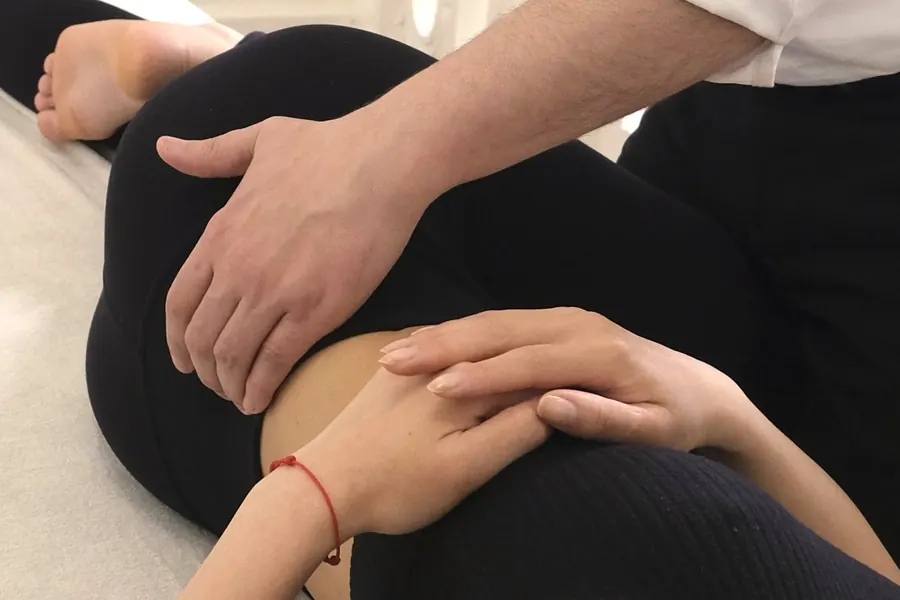
Going over your whole history
Have you ever fallen on your bottom, even a long time ago? Given birth? Had surgery on your abdomen or pelvis? How are your bowel habits? Does your pain follow your cycle? Do you have a diagnosis made from a scan? These questions map out the overall picture before any examination.
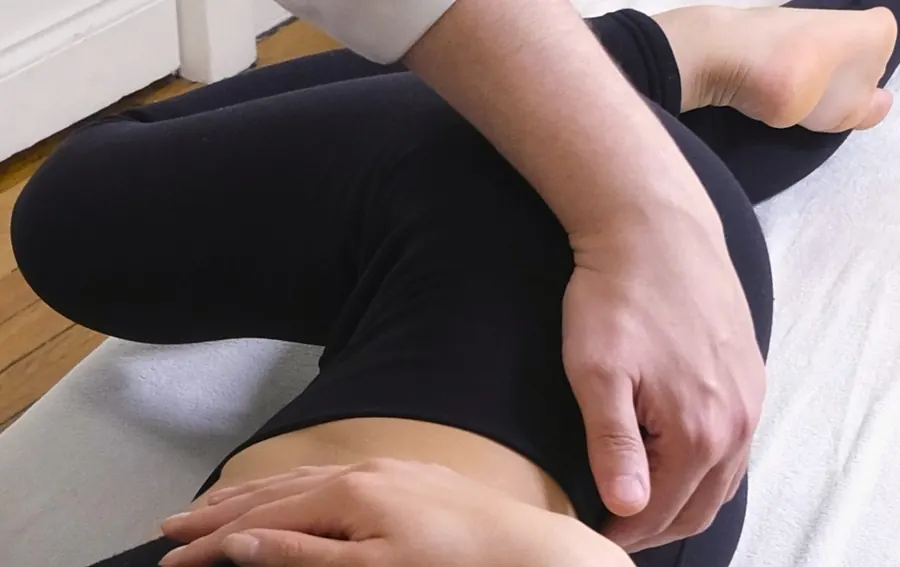
Ruling out what needs a doctor
Some signs require a doctor’s opinion without delay, and we always check for them. Loss of strength in a leg, difficulty passing urine or holding it in, loss of feeling in the area you sit on, sudden pain with a fever, pain that wakes you at night with no position that relieves it. If any of these signs is present, we refer you to a doctor immediately.
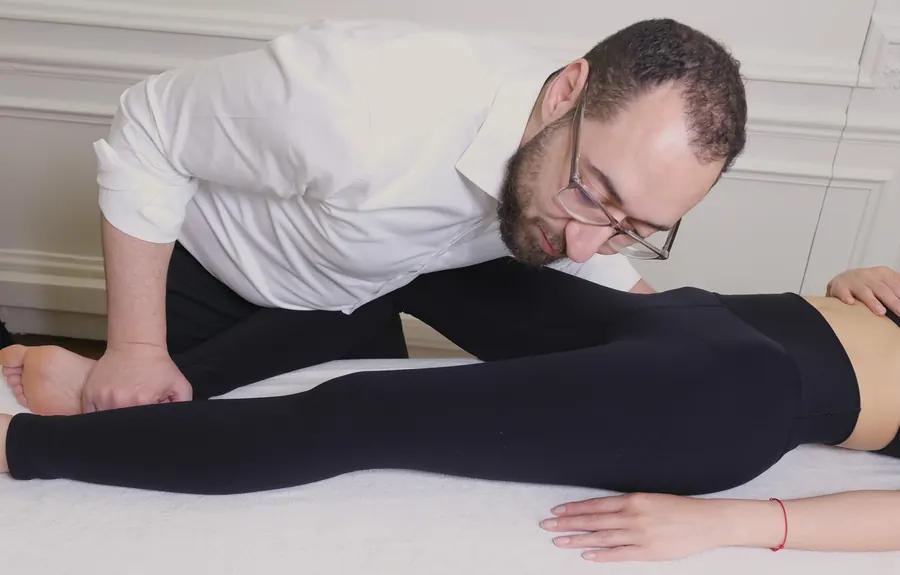
Releasing before correcting
We test the right and left sides of the pelvis separately, because the two sides carry neither the same tensions nor the same connections. Then we release what the body points to as the priority, which is sometimes far from the painful area, before working on the pelvis itself. Correcting a restriction without first clearing what was holding it in place brings only a few days of relief.
Frequently asked questions
Frequently asked questions about low back pain, sciatica and herniated discs
My MRI shows a herniated disc. What can you do?
We work on the pain and the compensations that have built up around the herniation, not on the herniation itself. This is an important distinction. A herniated disc seen on a scan does not necessarily cause pain; many people have one without knowing it. What hurts is usually the way the body has organised itself around this area to protect it, and the tension this creates elsewhere. By restoring mobility to the areas the herniation has spared, we redistribute the strain on the disc.
I have been told I have degenerative disc disease. Is it irreversible?
Disc wear is part of normal ageing, like grey hair, and it shows up on the scans of many people who have never had back pain. The disc, for its part, does not repair itself. But your comfort depends far less on the state of the disc than on the mobility of everything around it. That is where work is possible, and that is often where the difference lies between daily discomfort and a normal life.
Why does my sciatica come back every year?
Because the irritated nerve is treated, but not what is irritating it. Sciatica is felt in the leg, but its starting point is almost always in the lower back or the pelvis. As long as the imbalance compressing the nerve remains, the body rebuilds the same strain and the flare-up returns, often at the same time of year or after the same kind of exertion.
My lower back hurts and I also have bowel problems. Is there a link?
Yes, and it is common. The main nerve relay that controls your bowel lies just in front of the sacrum. So tension in the pelvis can disrupt your bowel movements, and a sluggish bowel can in turn pull on its attachments and tire the lower back. Each keeps the other going. This is one of the reasons we always ask about digestion when a patient comes in for back pain.
Can I see an osteopath during pregnancy?
Yes, from the first trimester right up to the last few weeks, unless your care team advises otherwise. Your weight shifts forwards, your ligaments soften under the effect of hormones, and your pelvis has to adapt to a new load within a few months. The techniques we use are gentle and adapted to your stage of pregnancy. The aim is comfort for the lower back, the pelvis and breathing, which becomes more difficult in late pregnancy.
I fell on my bottom years ago. Can that still matter?
Absolutely. A fall onto the tailbone or the sacrum leaves a strain at the very base of the body’s axis. The tailbone is linked by continuous attachments to the spine and all the way up to the skull. The body compensates at the time, and this compensation can surface much later as low back pain, pelvic pain or discomfort when sitting. It is a question we ask at every consultation for this area.
When should I see a doctor urgently?
Some signs mean you need medical advice straight away. Loss of strength in a leg, difficulty passing urine or holding it in, loss of feeling in the area you sit on, sudden pain with a fever, or pain that wakes you every night and that no position eases. If you notice any of these signs, contact your doctor or go to the emergency department before doing anything else.
Where should I go: Paris 8 or Vitry-sur-Seine?
Both clinics apply the same method. The Paris 8 clinic is at 32 avenue de Friedland, near Charles de Gaulle Étoile. The Vitry-sur-Seine clinic is at 11 rue Corneille. Simply choose the one that is easier to reach from your home or workplace.
See an osteopath in Paris 8 or Vitry-sur-Seine
If you recognise yourself in this page, a consultation will help us understand the real origin of your symptoms and respond in a way that fits your history.
More of what we treat
Explore what else we treat
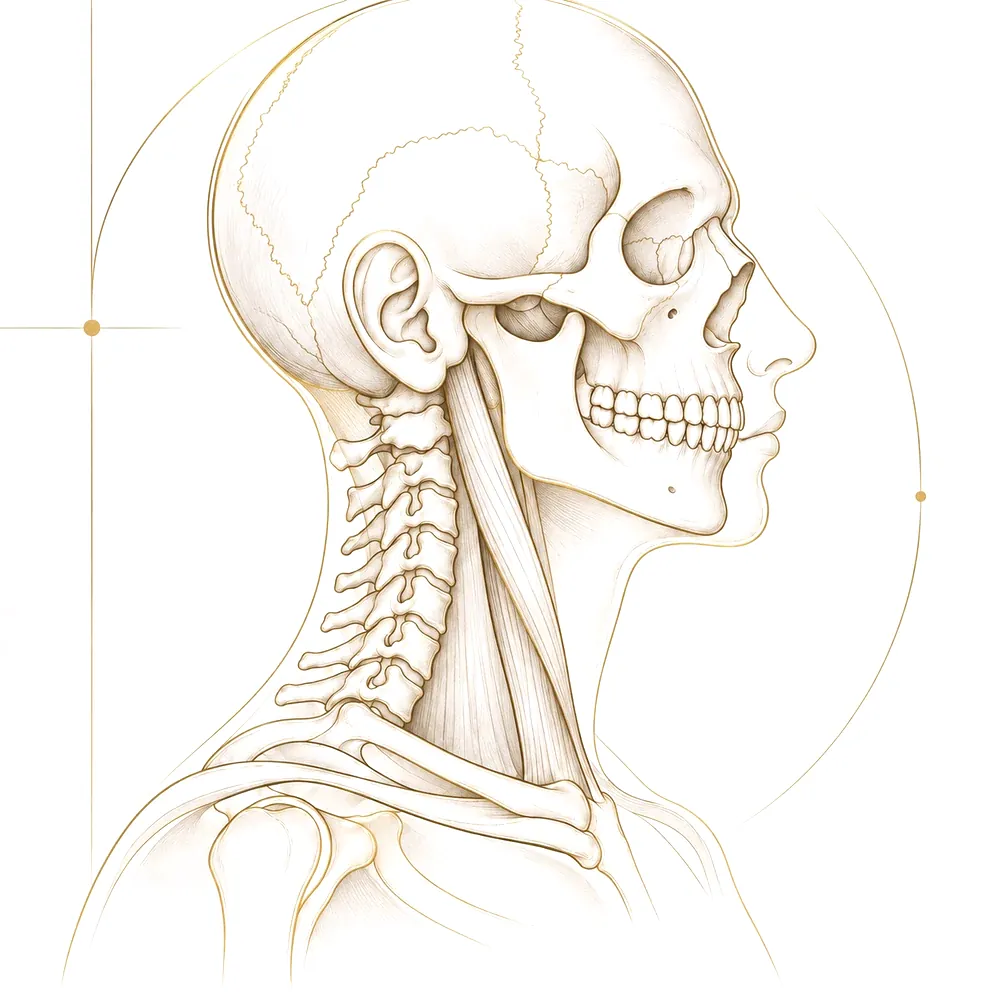 Head, neck and jawMigraines, neck pain, dizziness, tinnitus, jaw locking, neuralgia and after-effects of neck injuries.
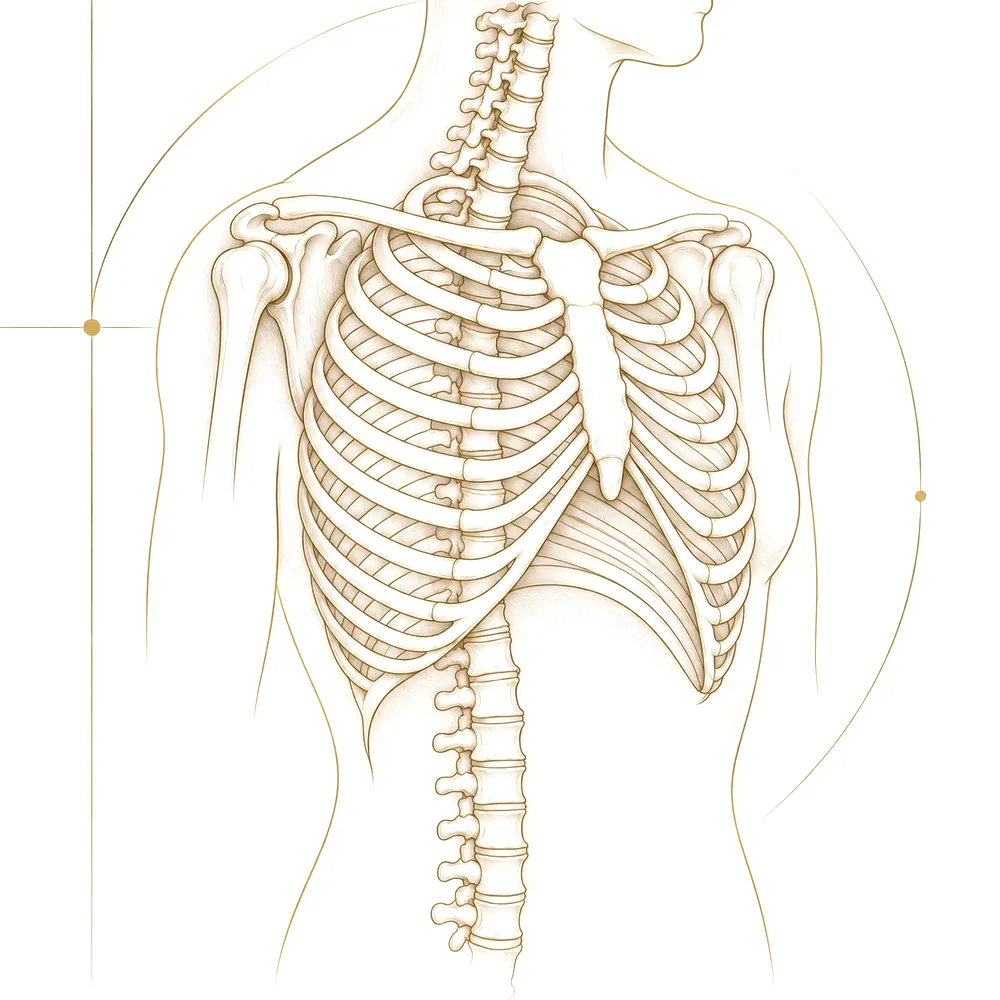 Back, chest and digestionReflux, pain between the shoulder blades, chest tightness, bloating and rib pain.
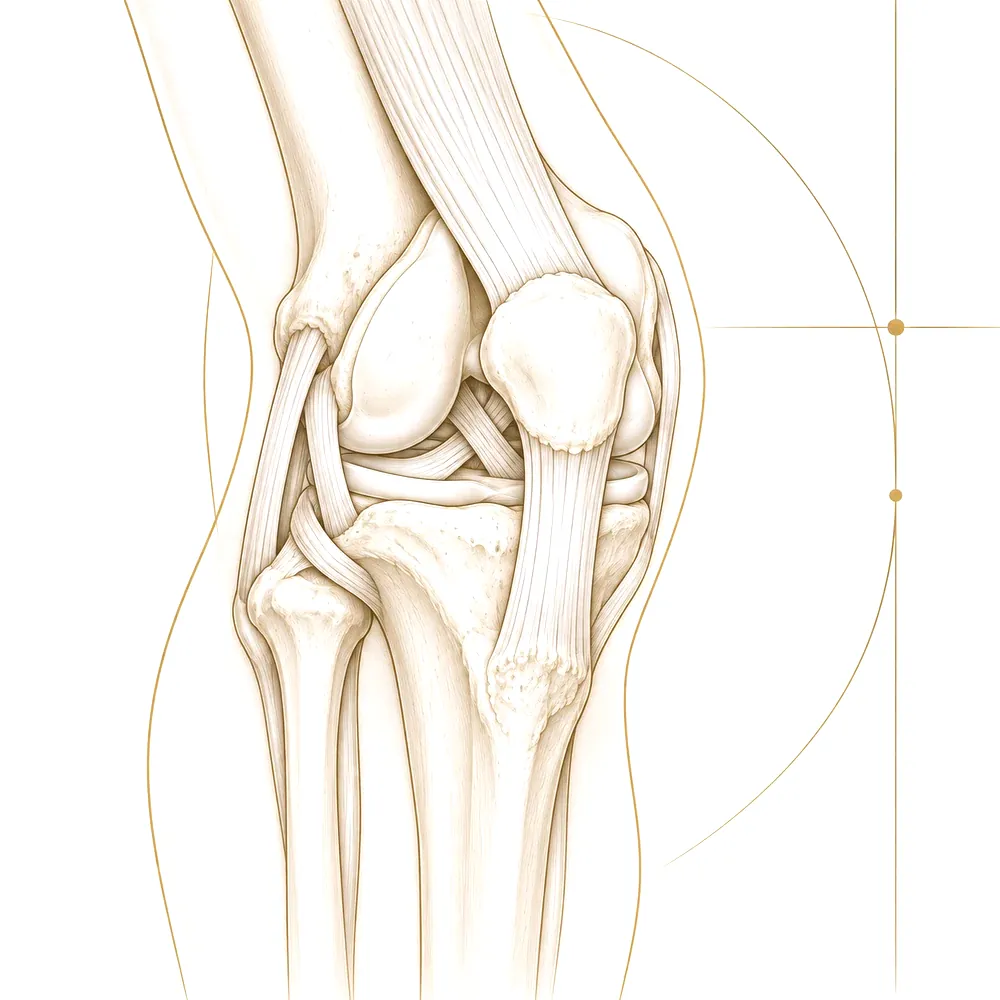 Joints and tendinitisShoulder, elbow, wrist, hip, knee, ankle. Tendinitis, sprains and pain that won’t go away.
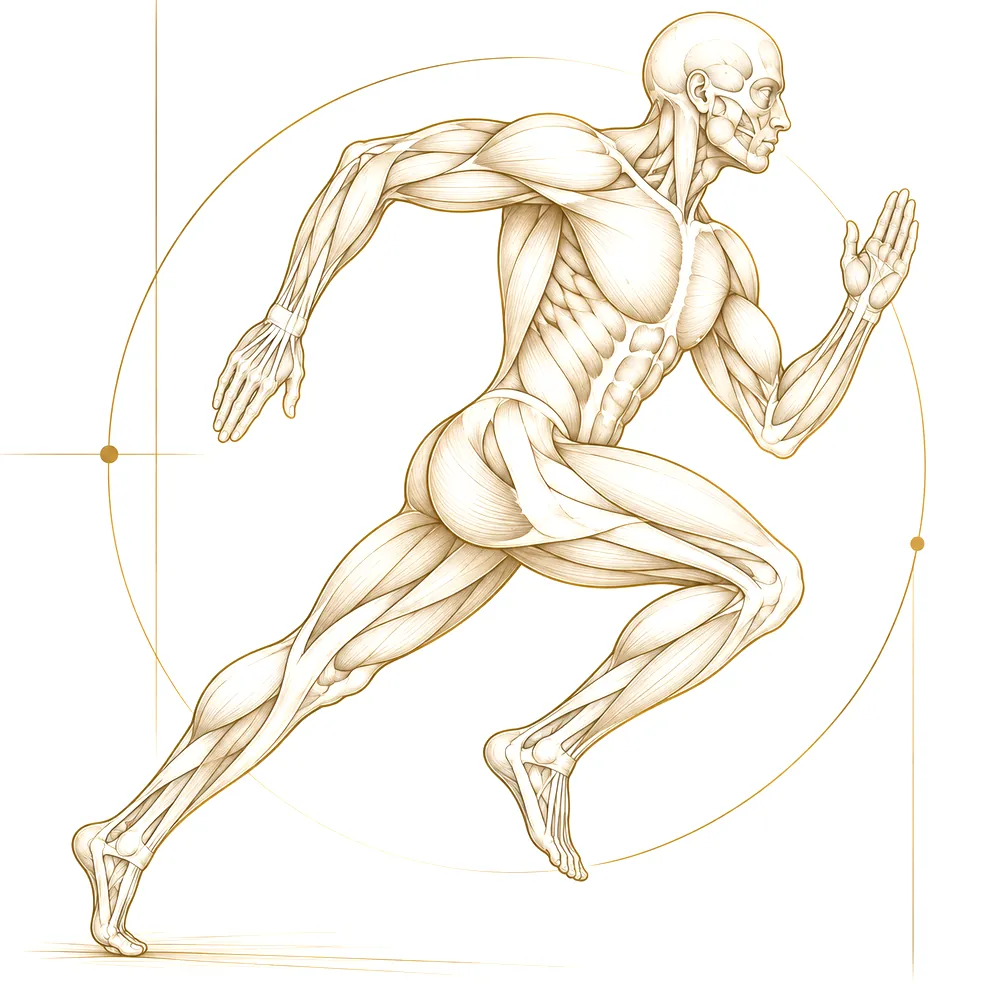 Sports osteopathyRecurring tendinitis, repeated sprains, muscle tightness, returning to sport after an injury.
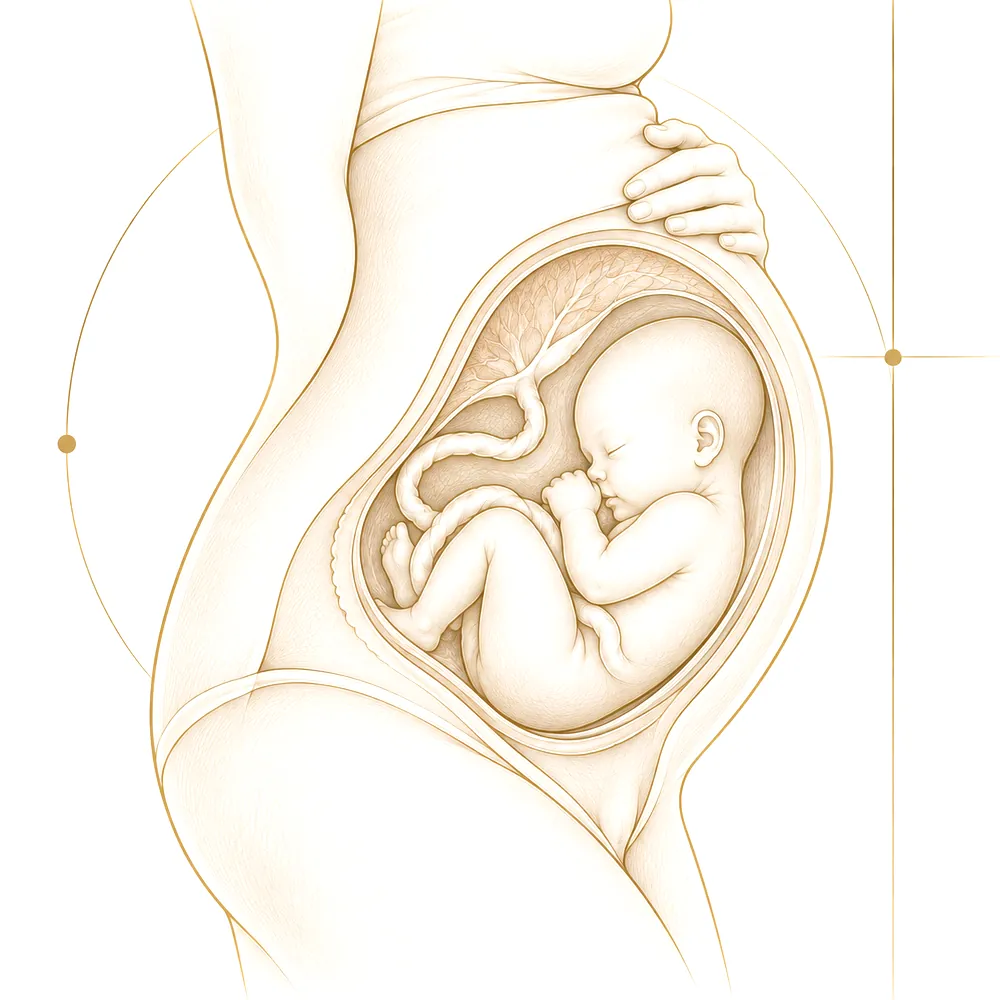 Pregnancy and postpartumBack pain, sciatica, pubic pain during pregnancy, a pelvis that has not recovered since the birth.
 BabiesHead always turned to the same side, a flattening skull, feeding difficulties, crying. From the first month.