
The method
The origin before the symptom
When pain lasts, the most exhausting part is not always the pain itself. It is not knowing why.
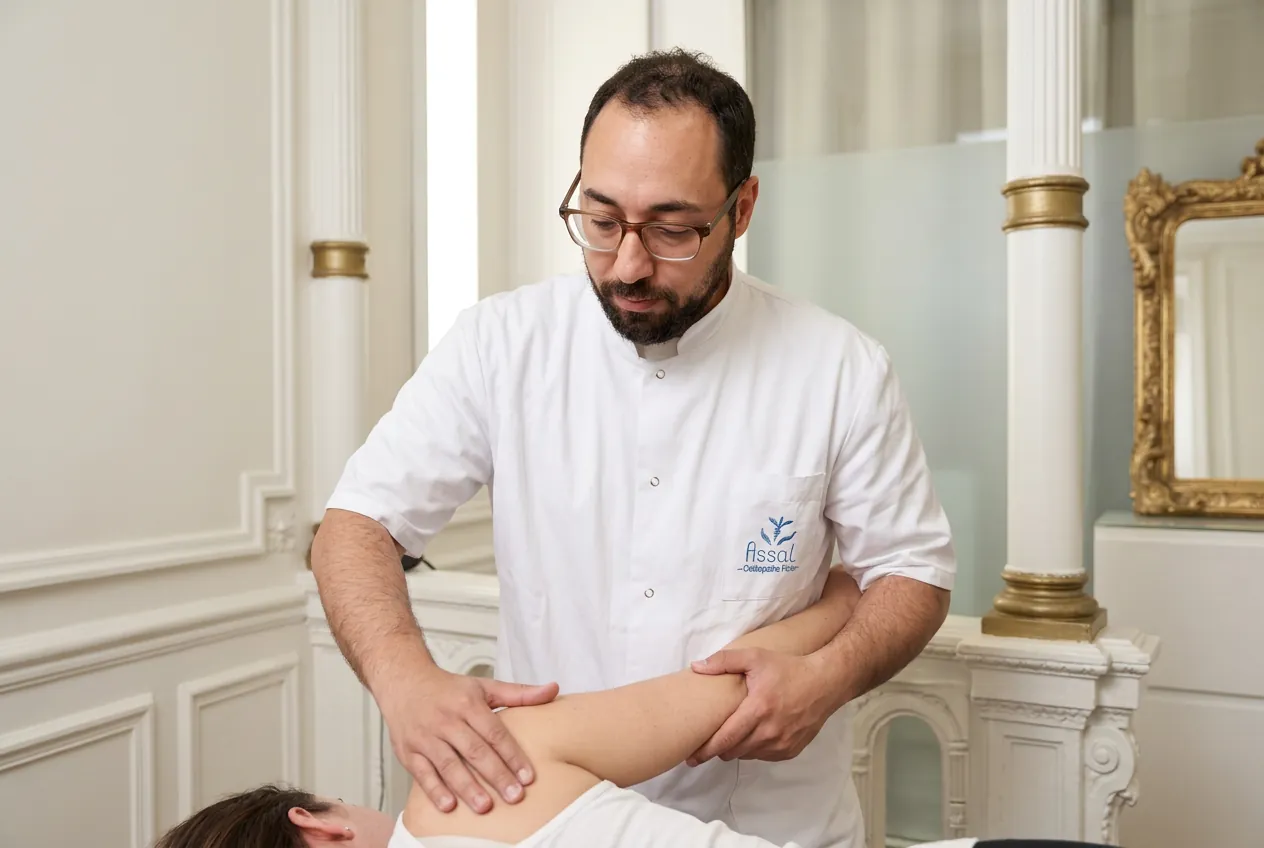
Your pain is not a mystery. It is a story, and it has a starting point.
This is the story the ASSAL Method sets out to read, in each body, through the ASSAL test, whose results you see at the same time as we do. Understand first. Then treat.
The logic, in three levels
If your pain keeps coming back, its origin lies elsewhere
You have probably already seen someone about it. You have had sessions, taken anti-inflammatories, done the stretches. The pain eased for a few weeks, then came back in the same place. You are not resistant to treatment. It is not your fault. The area that hurts was relieved, but what makes it hurt was left untouched.
Perhaps you have wondered why you hurt in this exact spot, when a friend or colleague who does the same activities and holds the same postures as you has no pain at all. The answer does not lie in what you do. It lies in the history of your body. Every body is unique, and each one stacks up its own compensations over time. Yours has adapted in its own way, layer upon layer, becoming a little more unbalanced each time, until the day it sounded the alarm. The pain you are feeling is that alarm.
To understand how it comes to this, you need to distinguish three levels. The trap is believing that the first is also the last.
It all starts with an area that has lost its mobility, often a long time ago. This can come from physical trauma such as a fall, a car accident, an operation or an old sprain. It can also come from an emotional shock, a bereavement, a separation, a period of anxiety, because the body keeps the imprint of what we go through. This is the real cause, and it is almost always silent. It does not hurt. That is exactly why no local treatment ever goes looking for it.
Around this area, your body adapts. It adjusts your posture, shifts the way you bear weight, and asks other regions to do the work of the one that can no longer keep up. This is the compensation pattern. This system can hold for years without you feeling a thing. The body absorbs it, in silence.
Then one area, after compensating for the others for so long, reaches its limit and gives way. That is where the pain appears, and that is what brings you to us. This is the visible symptom. This painful area is the last link in the chain. It is where your body finally gave out, rarely where it all began.
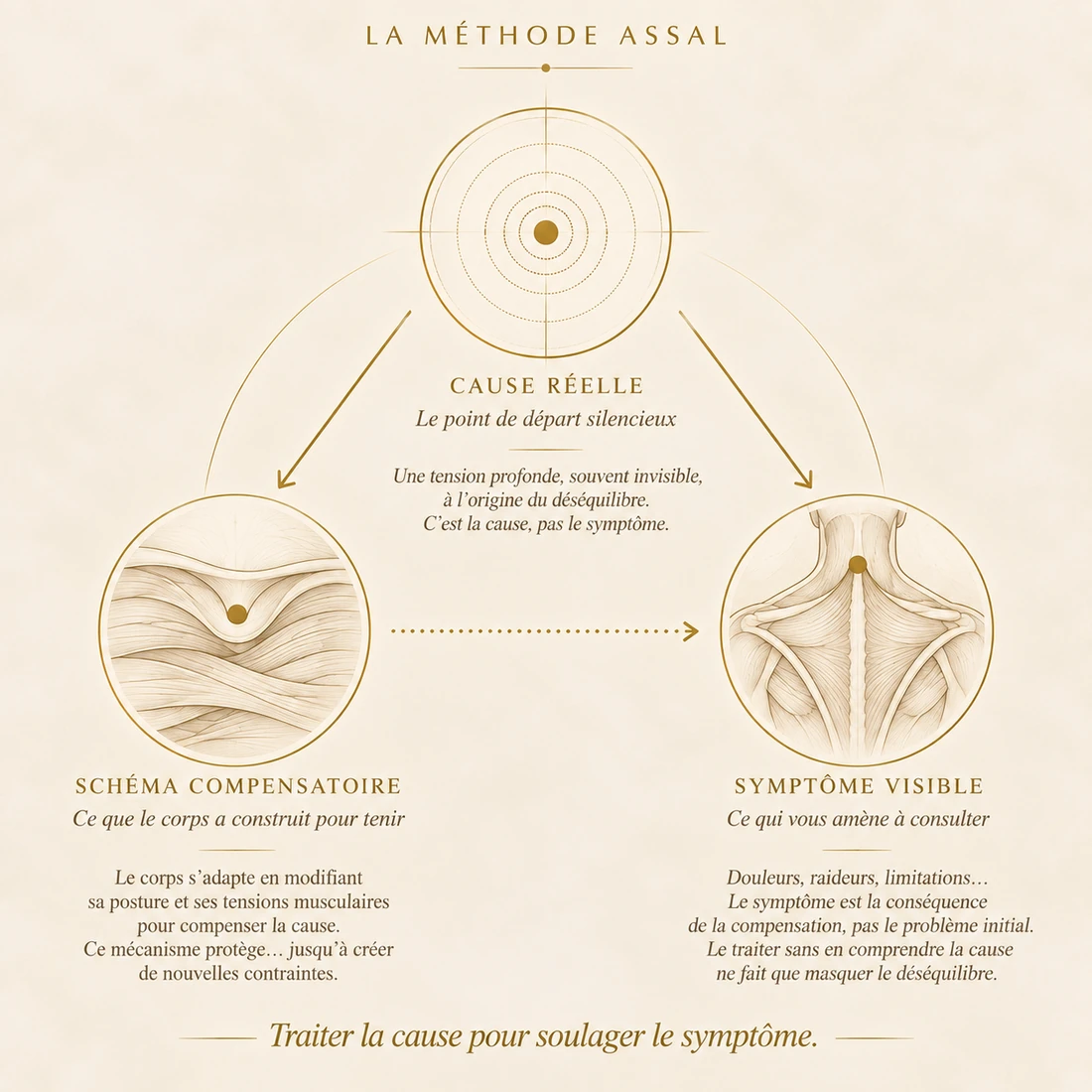
That is why pain treated where it shows itself ends up coming back. It is precisely why the ASSAL Method exists. It unpicks the patterns your body has put in place to keep functioning, and follows the thread of these adaptations back, from the symptom to its origin, the starting point from which everything began to fall out of balance.
Where the usual approach treats the pain, the ASSAL Method treats the story that produced it.
Read the article: Fascia, the little-known tissue that connects the whole body
How a session unfolds
What really happens during your consultation
Here, the session follows a precise thread, in five steps, designed to trace your pain back to its origin. At every moment, you know what we are doing, and why.

The case history
You tell your story. Not just today’s pain, but everything that may shed light on where it comes from: your medical history, your accidents, your operations, your daily life, sometimes past events that seemed unrelated. You talk, and the first pieces are already falling into place.
The test
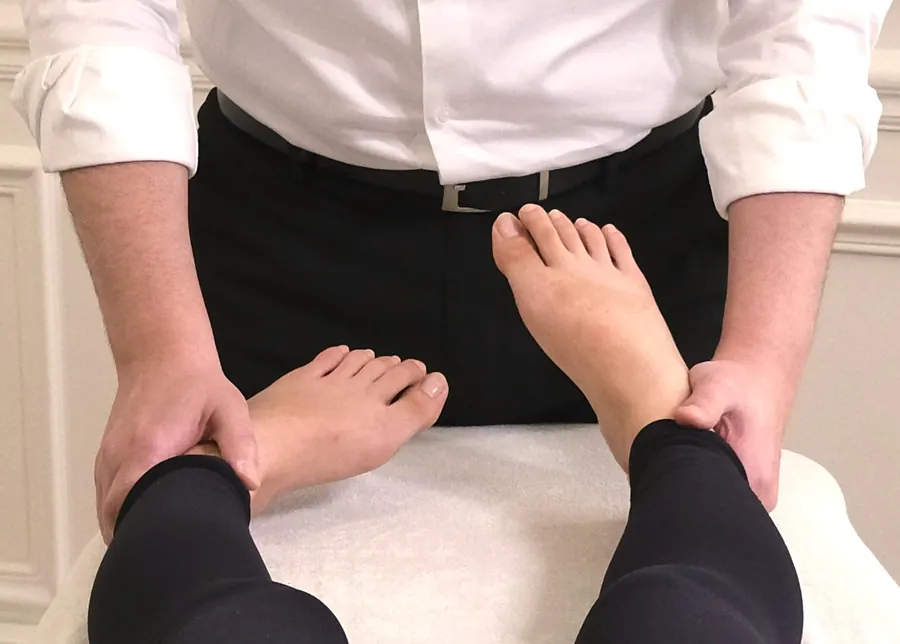
A short, precise clinical examination on the treatment table. It identifies the area at the origin of the imbalance, the one that stays silent behind the pain. You simply lie still while your body begins to speak.
Finding the priority
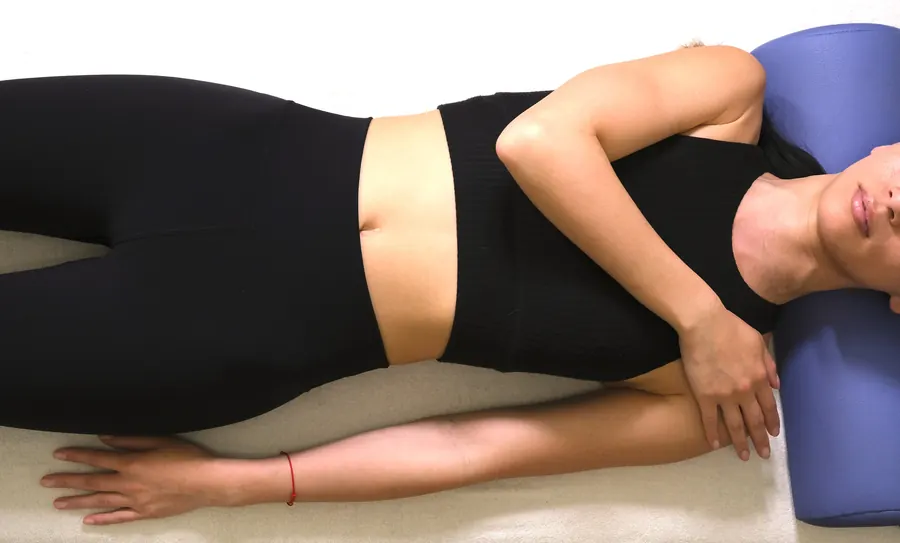
The body builds its adaptations in a precise order, and that is the order we trace back. It responds on its own, with its own signals, which we read as they come.
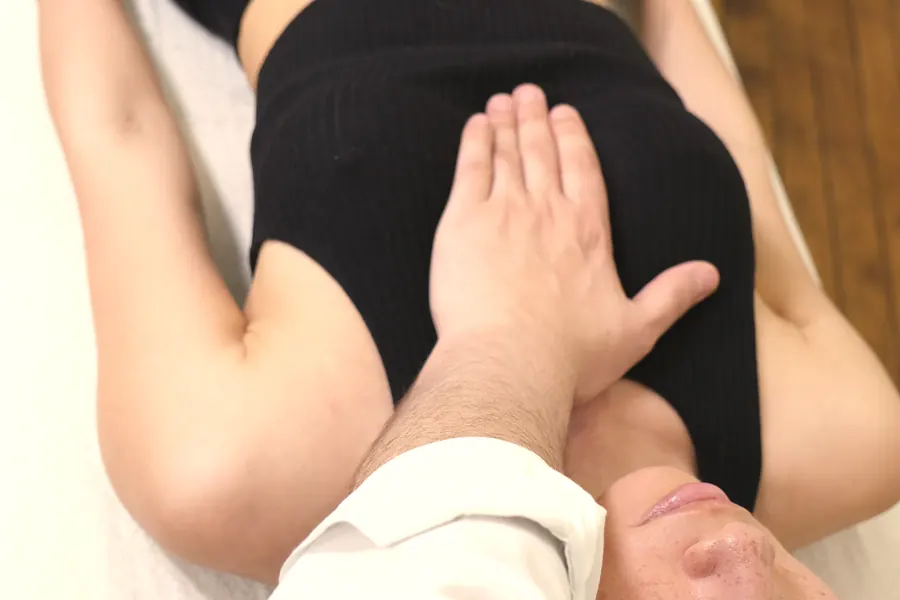
The treatment
The area identified is treated first, with the most suitable technique from the whole range of osteopathy: structural, fascial, visceral or cranial. The choice follows from the reasoning. It is your body that indicates which one it needs.
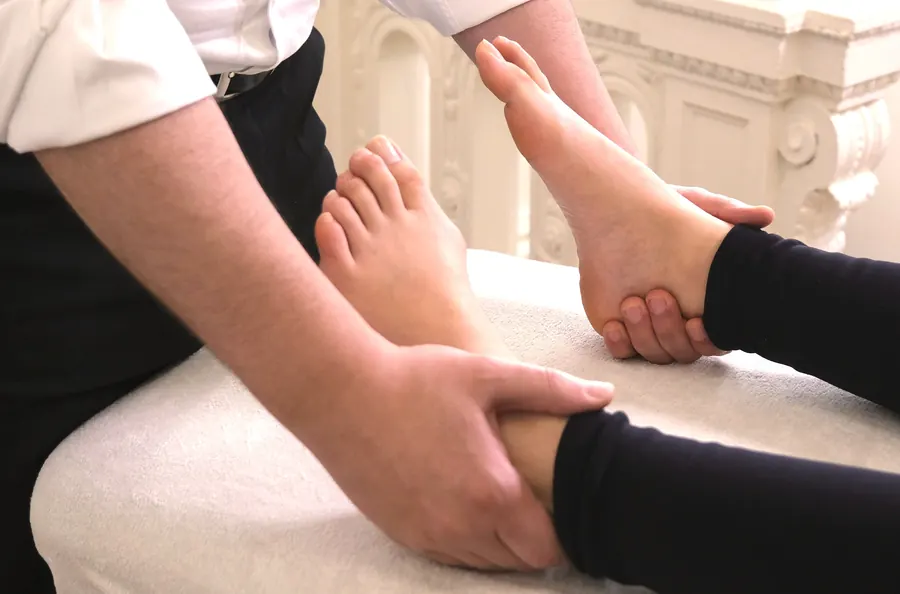
The retest
This is where everything is verified. We repeat the test, and this time you see the result with us, in real time. The area has freed up. Sometimes another one appears beneath it, which we treat in turn. You watch your body change before your eyes, step by step.
That is what makes all the difference. You leave relieved, having understood your body and having seen it respond.
The ASSAL test
Reading the body before deciding where to act
The ASSAL test, developed by Hosam ASSAL, answers one precise question, the only one that really matters: of all the areas under tension, which one came first. That first area is what we call the primary area.
The principle comes down to a loop. The test points to a primary area. We treat it. We repeat the test, and a new layer appears, until then hidden by the first. We treat that one in turn. The loop repeats until the body stops revealing new layers, and each retest confirms what has shifted before we move on. Every body keeps its own pace, and the number of layers to release varies from one person to the next.
This mechanism changes two things.
It makes the session objective. Every decision rests on a response from the body that can be measured in the moment. That is what makes the approach reproducible, from one patient to the next and from one session to the next.
And it makes your story readable. Layer by layer, the order in which your body adapted becomes clear. You find out that the area that hurts today is linked to something older, and sometimes further away in your body.
The ASSAL test is what turns an intuition into a decision.
What changes for you
What you take away when you leave the clinic
An explanation, at last
You know where your pain comes from, how it set in, and why it kept coming back. This understanding changes your relationship with your body. You stop wondering what is wrong with you, and worrying with every difficult morning.
The proof, before your eyes
The retest shows you, in real time, what has shifted. You move, you compare, you see for yourself. You leave with certainty, and that certainty is worth more than any promise.
Results that last
When the cause is treated, your body lets go of the compensations it had built up. Relief is then measured in months, and life often goes back to normal: you sleep without hunting for the right position, you carry your child without thinking twice, you go back to the sport you had set aside.
When to come in
What this approach treats, and what calls for something else
The ASSAL Method is first and foremost for pain that lasts and keeps coming back. Recurring low back pain, chronic neck pain, sciatica, repeated stiff necks, migraine and headaches, shoulder or jaw pain, digestive problems with no identified cause, joint pain that returns despite physiotherapy or anti-inflammatories. Anything that stems from a functional imbalance finds a clear framework here.
It works as a complement to medicine. A fracture, an infection or an organic disease calls for a medical opinion and further tests. Before every session, we check that your situation falls within the scope of osteopathy. If it goes beyond it, we refer you to the right person: a doctor, surgeon, physiotherapist or podiatrist.
The test has its limits, and sometimes a body needs something other than manual treatment. You would probably rather hear that said plainly than find it out after three sessions.
Understanding your pain starts with a consultation
Time to go back over your story from the beginning, to look for the origin, and to show you what shifts.