In-company training
Posture training for companies
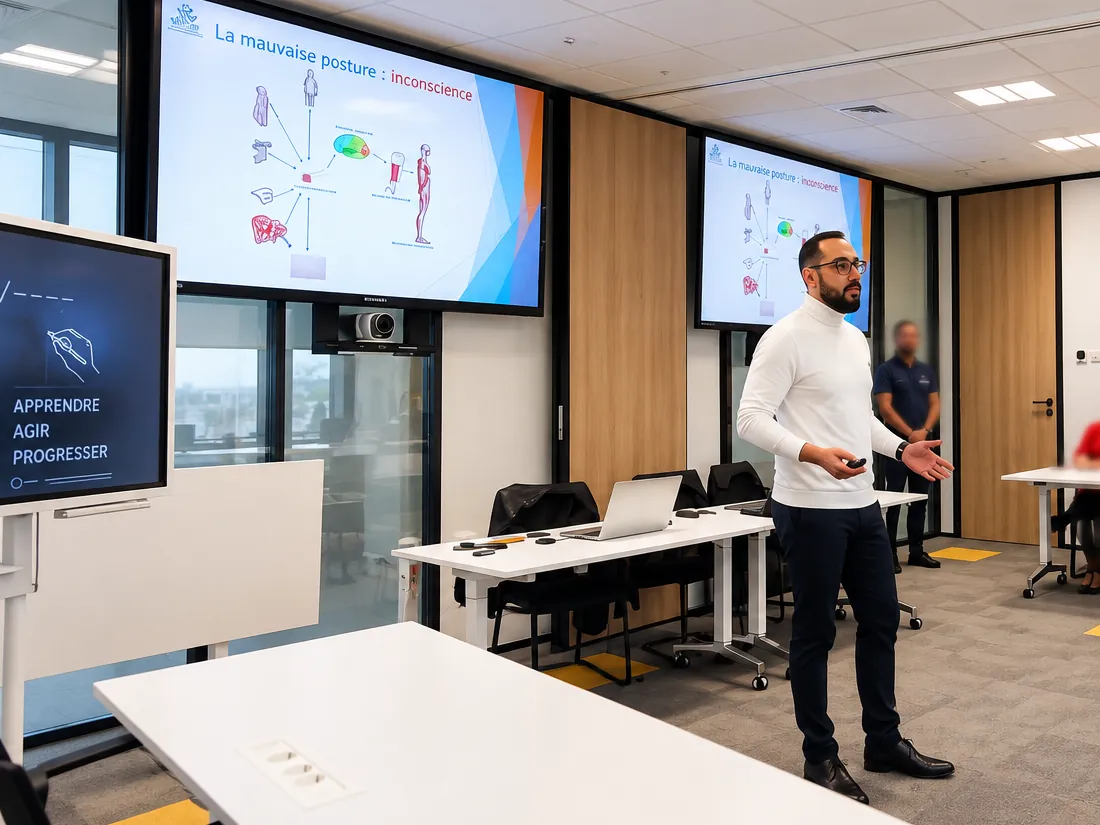
Two- to three-hour sessions on your premises, for office staff as well as manual handling teams or healthcare workers. I lead them as an osteopath. Your teams learn where work-related pain comes from, practise the right movements, and leave with advice given at their own workstation.
Why an osteopath
Why work ends up hurting
The body compensates. Until the day it no longer can.
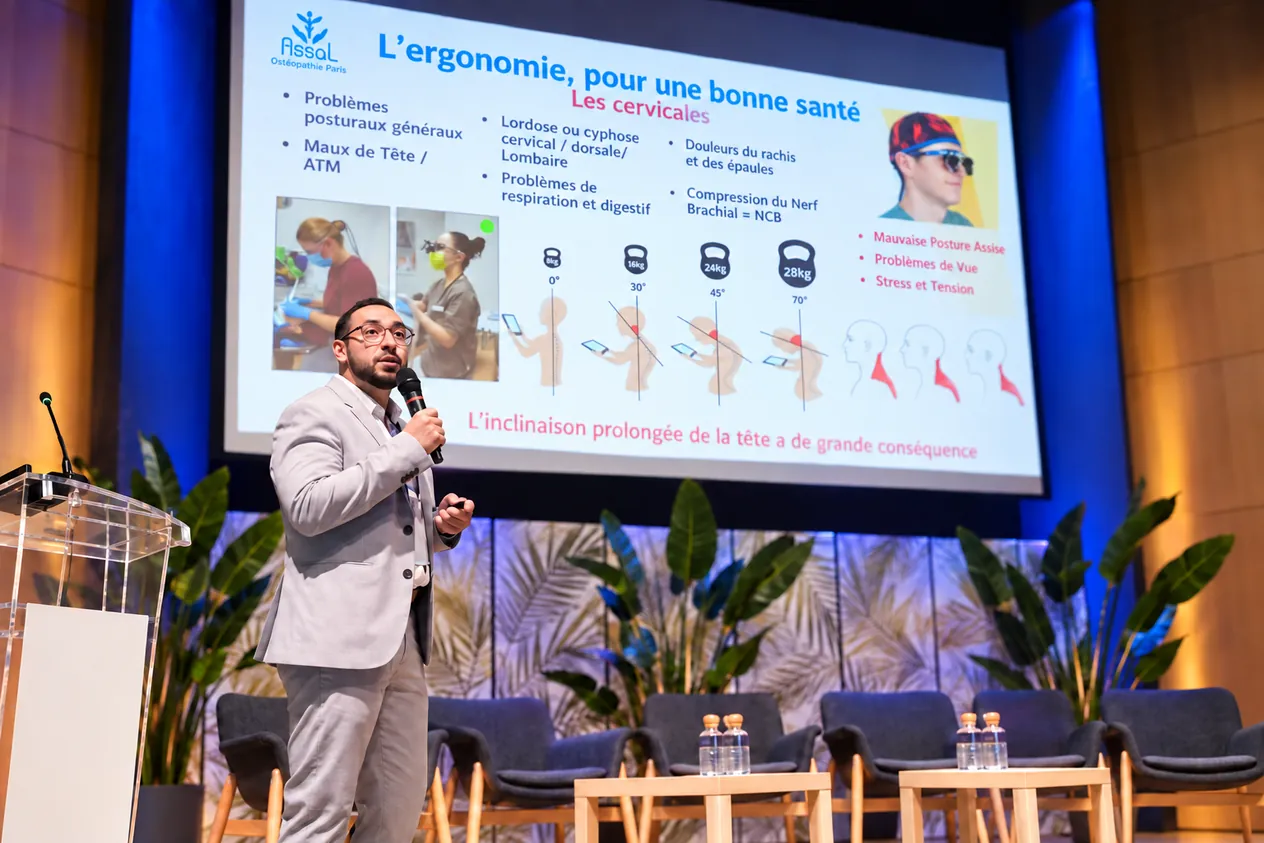
A day spent sitting in front of a screen. Boxes lifted, put down, lifted again. A patient helped to sit up in bed. The body adapts to each of these movements without a word. Then one morning, the back seizes up or the shoulder refuses to lift. The pain appears where adaptation has reached its limits, and that is not always where it all began.
We see this kind of pain in our consultations. According to INRS (the French National Research and Safety Institute), musculoskeletal disorders, known as MSDs, account for the vast majority of recognised occupational diseases in France.
Posture training led by an osteopath starts from what I see in my clinic: how the body organises itself to keep going, and which movements stop it from wearing itself out.
What the French Labour Code says
When the work involves manual handling, the employer must give employees safety training. During this training, which is “essentially practical in nature”, they are informed of the movements and postures to adopt (French Labour Code, Article R4541-8).
Who it is for
Every job has its own movements
Pain is not the same behind a screen, pushing a trolley or at a patient’s bedside. The session starts from what your teams do every day.
Office work.
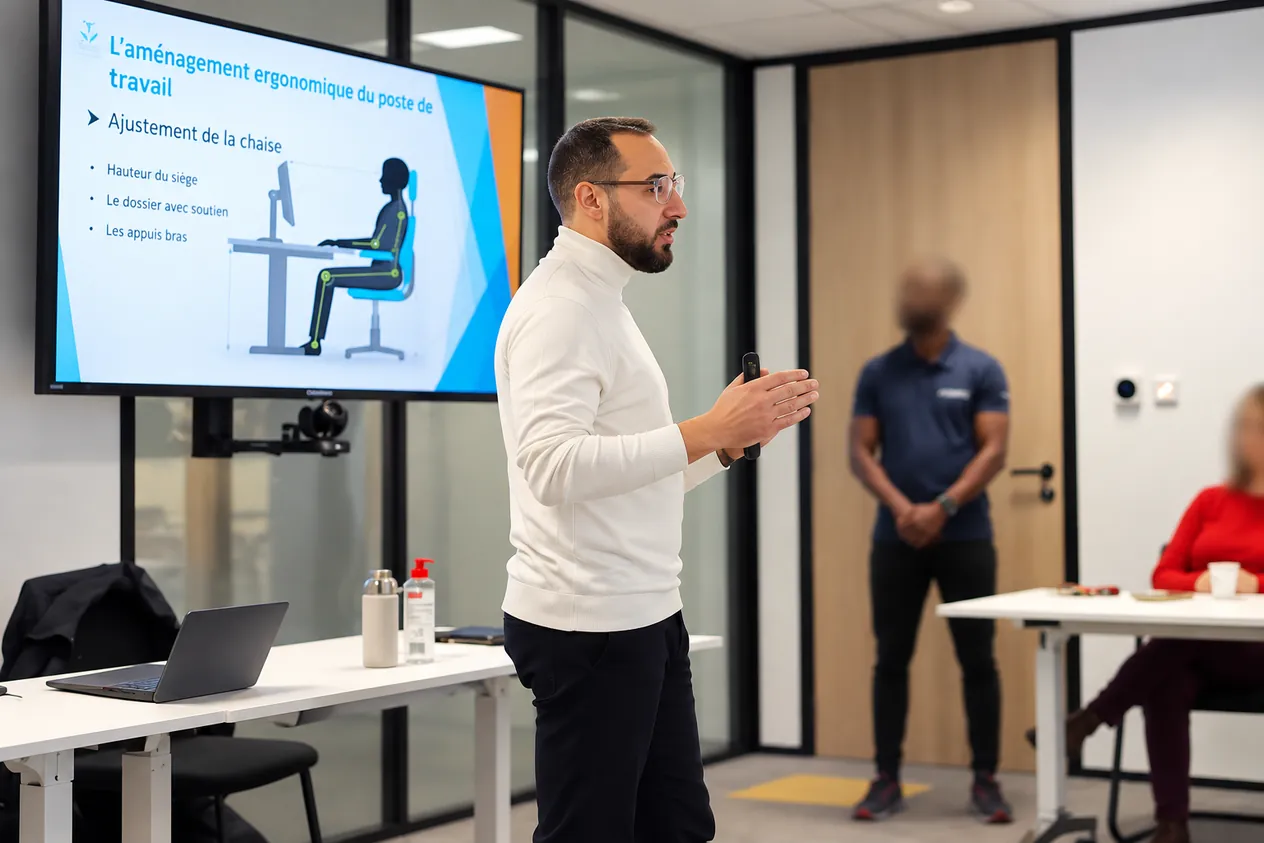
Hours spent sitting, the screen too low, the mouse too far away. The neck and upper back carry the whole day, and tension builds up without warning. At the workstation, I go over the screen height, the chair settings and the keyboard position with each person.
Manual handling.
Lift, carry, put down, start again. The lower back takes the strain, and so do the knees. The movements that protect them can be learned: getting close to the load, bending your knees, pivoting on your feet rather than turning your upper body.
Healthcare.
Helping a patient sit up, turning them, leaning over a bed, standing for hours. Healthcare staff carry more than people think. The session is built on the movements used in your department.
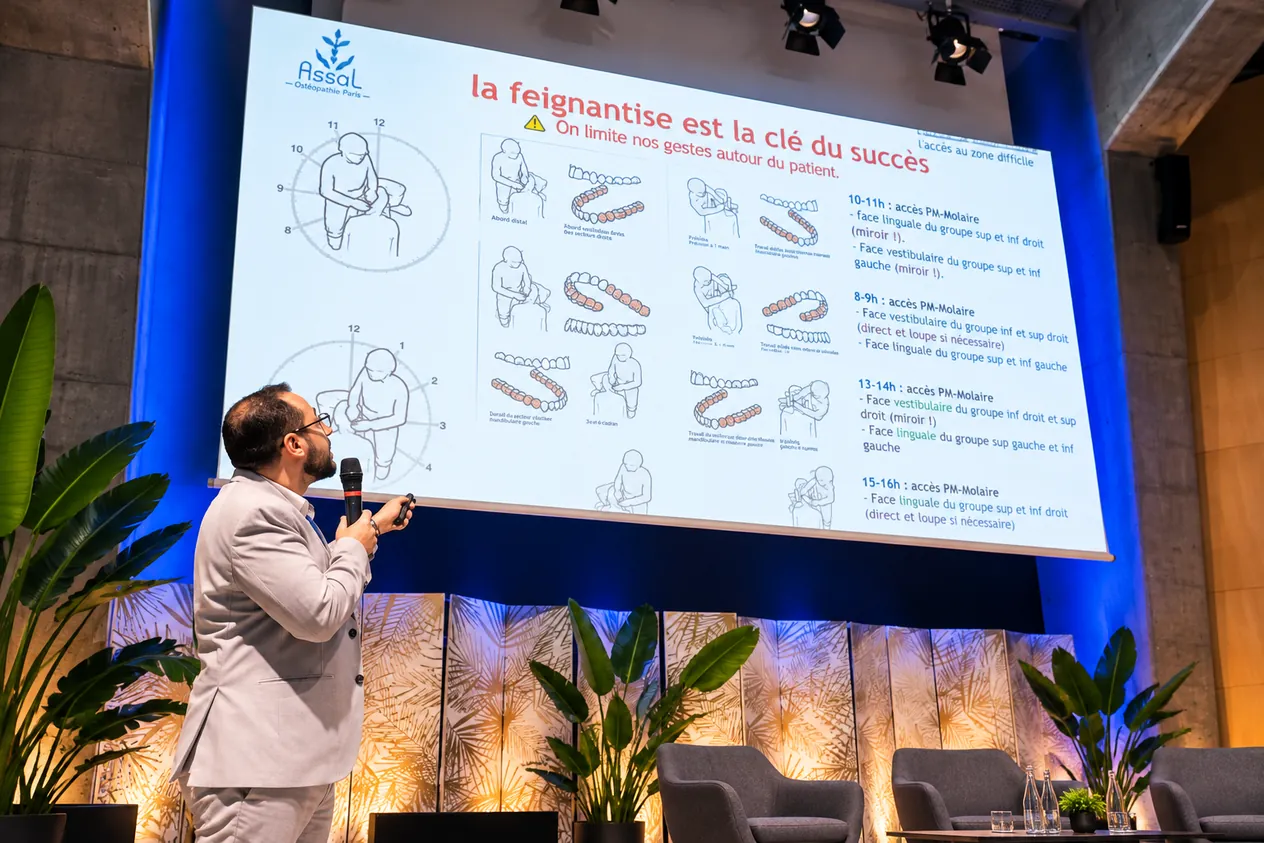
Dental practices
Among the health professions, I work mainly with dentists, helping them with the pain their work brings on. A dentist works leaning towards the patient, arms held away from the body, repeating the same fine movements all day long. The neck, shoulders and lower back often end up complaining. I also work with doctors.
How it works
One session, two to three hours
Each session follows four stages, from the simplest to the most concrete. Your employees leave with movements they have already practised, and exercises they can repeat on their own.
Step 1
Understand
How the back works, why a repeated movement ends up hurting, how the body compensates before it complains. Plain words, and examples taken from your line of work.
Step 2
Practise
Bending down, lifting, carrying, holding a posture: everyone tries out the right movements as a group, and I correct them.
Step 3
At the workstation
Then I go round the workstations, one by one. I watch how each person works and give advice on the spot.
Step 4
Keeping good habits
A few simple warm-ups and stretches that everyone can repeat on their own, before starting work or during a break.
In practice
Organising a session
- Duration
- Two to three hours per session.
- Location
- On your premises.
- Who it is for
- Office staff, manual handling teams, healthcare staff, dentists and doctors.
- Price
- Quotation on request.
- Funding
- To run my courses, I work with Qualiopi-certified training organisations (Qualiopi is the French quality certification for training providers). Depending on your situation, your OPCO (your company’s training fund) may cover the cost of the training.

Who leads the training
Hosam ASSAL, osteopath
“I have always been drawn to preventive health.”
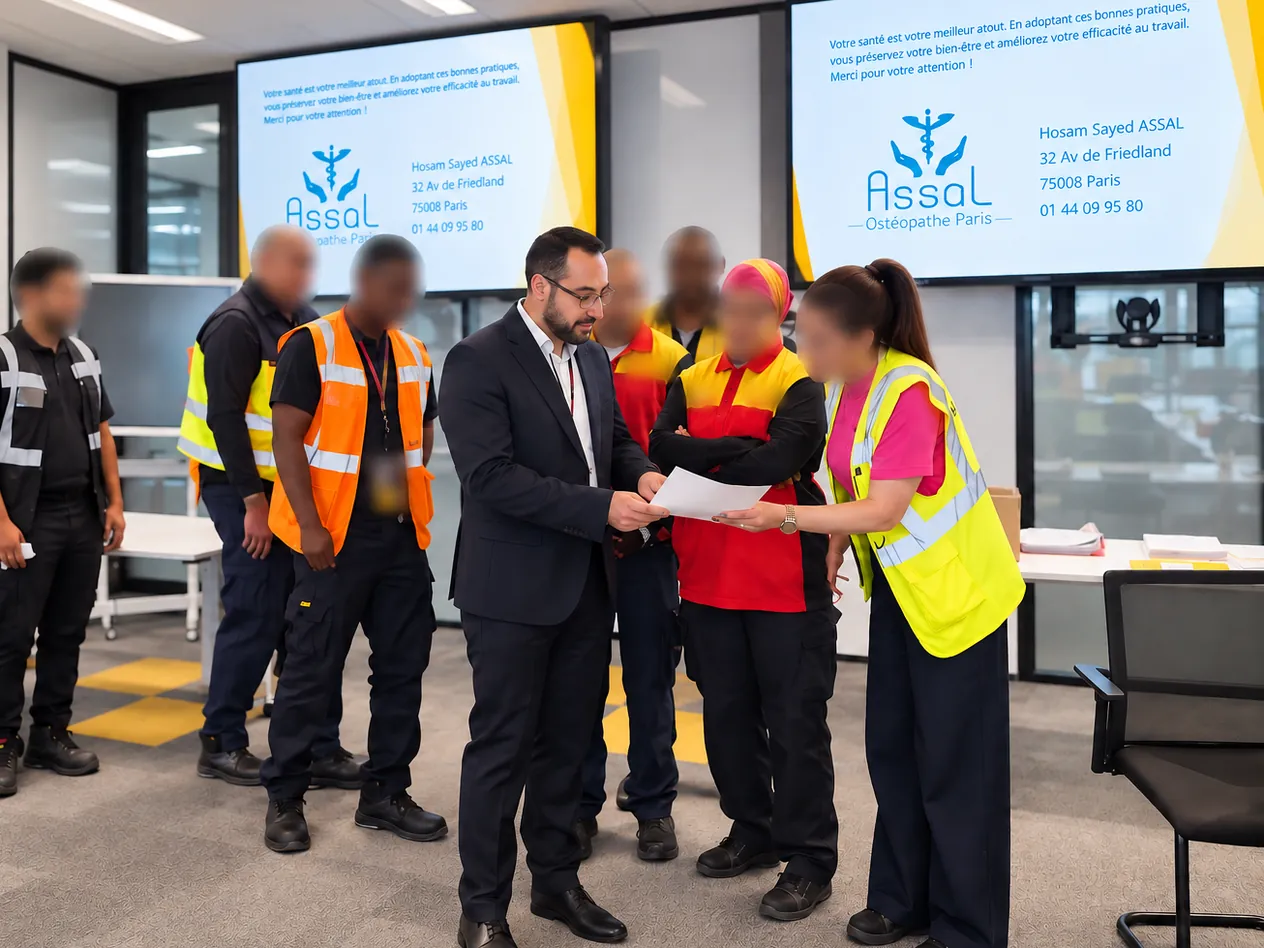
A graduate of the École Supérieure d’Ostéopathie de Paris, I have practised in Paris 8 since 2013 and in Vitry-sur-Seine since 2017. Since 2025, I have been running posture and manual handling training in companies, notably with teams at DHL.
Read my storyFrequently asked questions
Questions companies often ask
How long does a session last?
Between two and three hours, on your premises. The session starts with theory, continues with group practice, then moves on to advice given to each person at their own workstation.
Which jobs is it for?
Office work, manual handling and healthcare. Among the health professions, I work mainly with dentists, and also with doctors.
Can the training be funded?
Depending on your situation, yes. I work with Qualiopi-certified training organisations, which means you can submit the training to your OPCO for funding.
How do I get a quote?
Email me at cabinet.assal@gmail.com or message me on WhatsApp at +33 6 51 77 41 86. Tell me your sector, the number of people to be trained and the roles involved, and I will reply with a proposal.
Request a quote
Tell me your sector, the number of people to be trained and the roles involved. I will reply with a proposal.
Are you a practitioner? See the ASSAL Method training