
What we treat
Head, neck and jaw: migraines, neck pain and dizziness
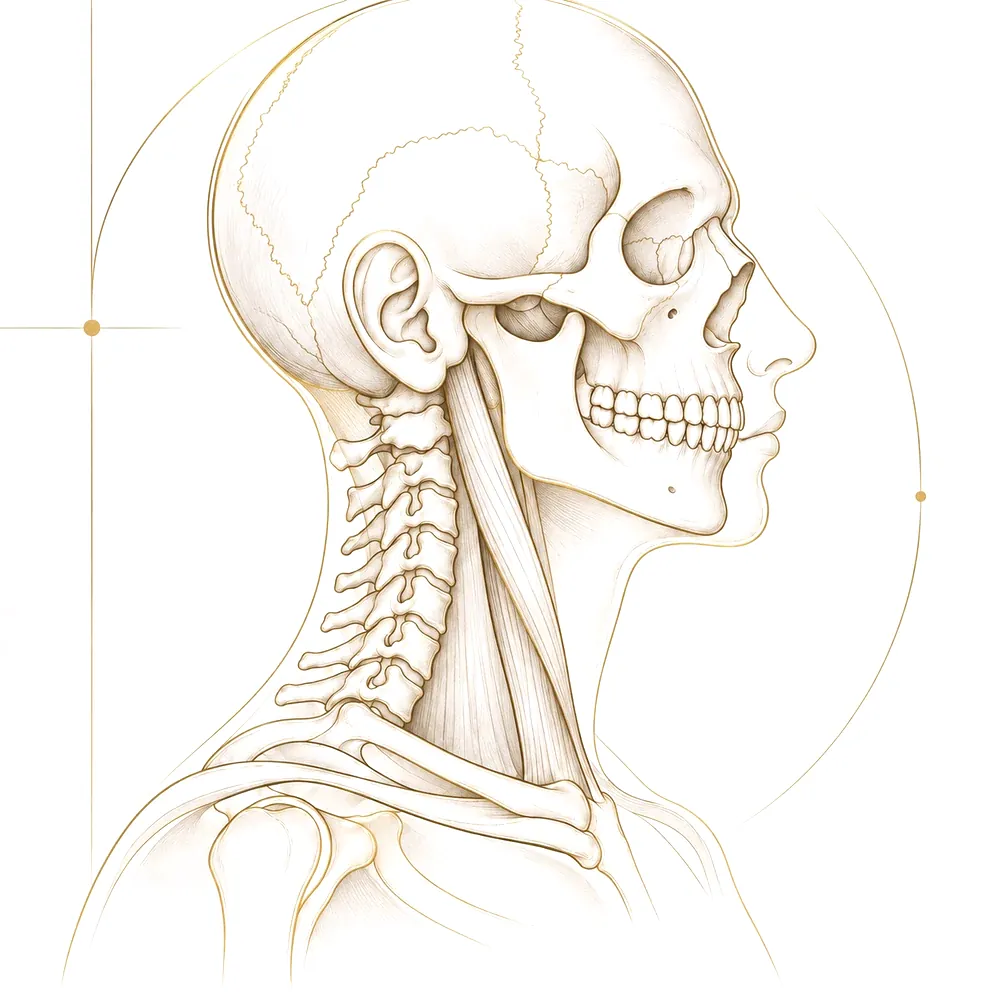
Migraines, neck pain, dizziness, tinnitus. Pain in this area is rarely isolated. It is part of a deep line of tension that connects the skull to the lower back. Understanding that line often means understanding why the pain persists. Consultations in Paris 8 and Vitry-sur-Seine.
What we treat
Migraines, tinnitus, jaw problems: the conditions we treat
The symptoms described below often occur together. Many patients come to us for just one of them and find that the others had the same origin.


Neck pain and stiff neck (torticollis)
A neck that is locked when you wake up, pain that runs down into the shoulder, bouts of stiff neck that keep coming back. When the trapezius muscle stays permanently tight, or your neck pulls on one side only, a nerve at the base of the skull is often at the root of it.

Migraines and headaches
Migraines at the temple, on the right or the left. Pain just below the back of the skull, known as occipital pain, or a band of pain across the forehead. A feeling of weight on top of the head. Where the pain is felt often shows where to look for its origin.

Dizziness and brain fog
Feeling unsteady, dizziness when you turn your head, a sense that your head is “full of cotton wool”, difficulty concentrating. Balance is controlled from the junction between the skull and the neck. Tension at this point can upset everything.

Tinnitus and a feeling of fullness in the ear
Buzzing, whistling, a feeling that your ear is blocked even though your ENT examination is normal. The jaw joint is anatomically very close to the ear. Tension in the joint can be passed on to the auditory system.

Jaw locking and teeth grinding
Pain when you open your mouth, a clicking jaw, teeth clenched at night, which is known as bruxism. More often than not, the jaw is expressing tension that comes from elsewhere in the body.

Blocked sinuses and persistent congestion
A chronically blocked nose, pressure on the eyes or cheekbones, a heavy head when you wake up. When tension in the structures of the face hinders the natural drainage of the sinuses, the symptoms keep coming back despite treatment. Sinusitis with a fever needs to be seen by a doctor first.

Occipital neuralgia (Arnold’s neuralgia) and facial pain
Shooting pain that starts at the nape of the neck and travels up to the back of the skull. Facial pain for which your dentist and ENT specialist have ruled out a dental or ENT cause. This pain follows the path of a nerve compressed by muscle or joint tension.

A lump in the throat and difficulty swallowing
A constant feeling of something stuck in your throat, discomfort when swallowing even though tests are normal. This is often linked to tension in the fascia of the neck, the thin membranes that wrap around every muscle and every organ like a second skin, and which here run from the skull down to the chest.

Chronic fatigue and poor concentration
A constant feeling of exhaustion even though tests are reassuring, difficulty concentrating, a less reliable memory, poor-quality sleep despite long nights. When the junction between the skull and the cervical spine is chronically tense, the nervous system stays in an exhausting state of alert.

Chronic stress-related tension
A neck that is permanently tight, a clenched jaw, trouble sleeping, a feeling that you never really let go. Chronic stress leaves its mark on this precise area of the body. Releasing this area often helps you sleep more deeply again.

Functional digestive problems originating in the neck
Persistent acid reflux, bloating, nausea even though digestive investigations are normal. A feeling of a knot in the throat, palpitations even though heart tests are reassuring. When tests come back normal despite the symptoms, the origin may lie at the base of the skull, where the nerve that regulates digestion emerges.

After-effects of whiplash and neck injuries
Neck pain that sets in after a car accident, a fall or a knock during sport, sometimes several years after the event. The body compensated at the time, but that compensation can show up later as neck pain, dizziness or migraines that tests leave unexplained.
Why this pain persists
Why your migraines and neck pain keep coming back
Nobody finds anything wrong, and yet you are in pain.
This area has one particular feature. It is where consultations multiply. A dentist for the jaw, an ENT specialist for the tinnitus, a neurologist for the migraines, a physiotherapist for the neck. Each one examines their own territory carefully, and each one finds it normal. The symptom, however, persists.
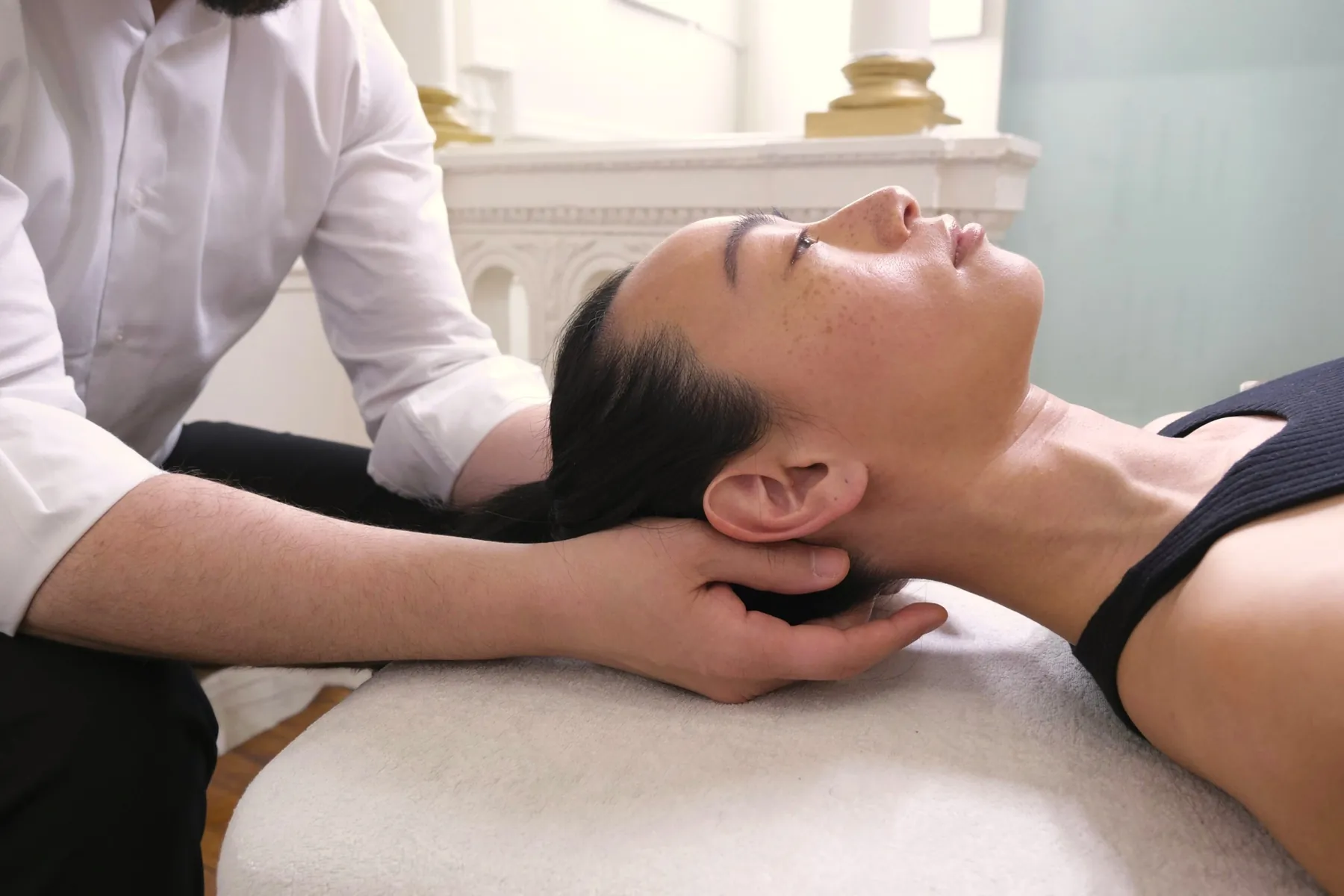
A normal test rules out a lesion. It leaves the question of a functional problem wide open.
There is a simple explanation for this persistence. The head, the neck and the jaw form a single unit crossed by the same line of tension, and that line runs much further down than the area that hurts.
It works in direct connection with the rest of the body, through what is known as the craniosacral axis. Behind this name lies something very concrete: a tough membrane, the dura mater, which wraps around the brain, runs down the entire length of the spine and attaches to the sacrum, right at the bottom of the back. Imagine a rope stretched between two points, from the skull down to the buttocks. Pull on one end, and the other end moves. That is exactly what happens in your body.
In practice, this means that long-standing migraines can originate in a shock that seemed harmless at the time. A broken nose in your teens, whiplash in a car accident, nose surgery, a major emotional shock, sometimes even a fall onto your bottom. Each time, the body absorbed the impact, redistributed the tension and found a new way of organising itself. This new organisation works, until the day it no longer does, and that is when the symptoms appear.
On top of injuries, there is a second mechanism: the sensors. Your eyes, your inner ear and your jaw constantly send information to your brain so that it can organise your posture. When one of these sensors goes off track, the whole system adjusts to compensate. Have you ever felt dizzy after changing your glasses? Or had neck pain in the weeks after dental treatment? That was this mechanism at work.
Stress and anxiety often complete the picture. The junction between the skull and the first vertebrae of the neck, which osteopaths call the C0-C1-C2 hinge, is the narrowest point on the entire nerve pathway between the brain and the body. This is where the vagus nerve runs: the nerve that regulates the digestive system, your sense of inner calm and the quality of your sleep. When this area becomes chronically tense, it can keep you in a permanent state of alert. Sleep gets worse, the jaw stays clenched at night, the shoulders never really come down. This is what patients often describe as “a feeling of brain fog”, a vague exhaustion that tests leave unexplained.
The vagus nerve is worth pausing on, because it explains clinical situations that often puzzle patients and their doctors. This nerve emerges at the base of the skull, just beside the first cervical vertebrae, then runs down through the neck and supplies most of the organs in the trunk, including the stomach, the intestines and the heart. When chronic tension settles at the base of the skull, this nerve can be mechanically irritated. And since this is the nerve that drives digestion, irritating it can cause chronic acid reflux, bloating, nausea, and sometimes palpitations even though heart tests are reassuring. This is why a patient can have every digestive test come back normal, then notice an improvement after targeted work on the base of the skull.
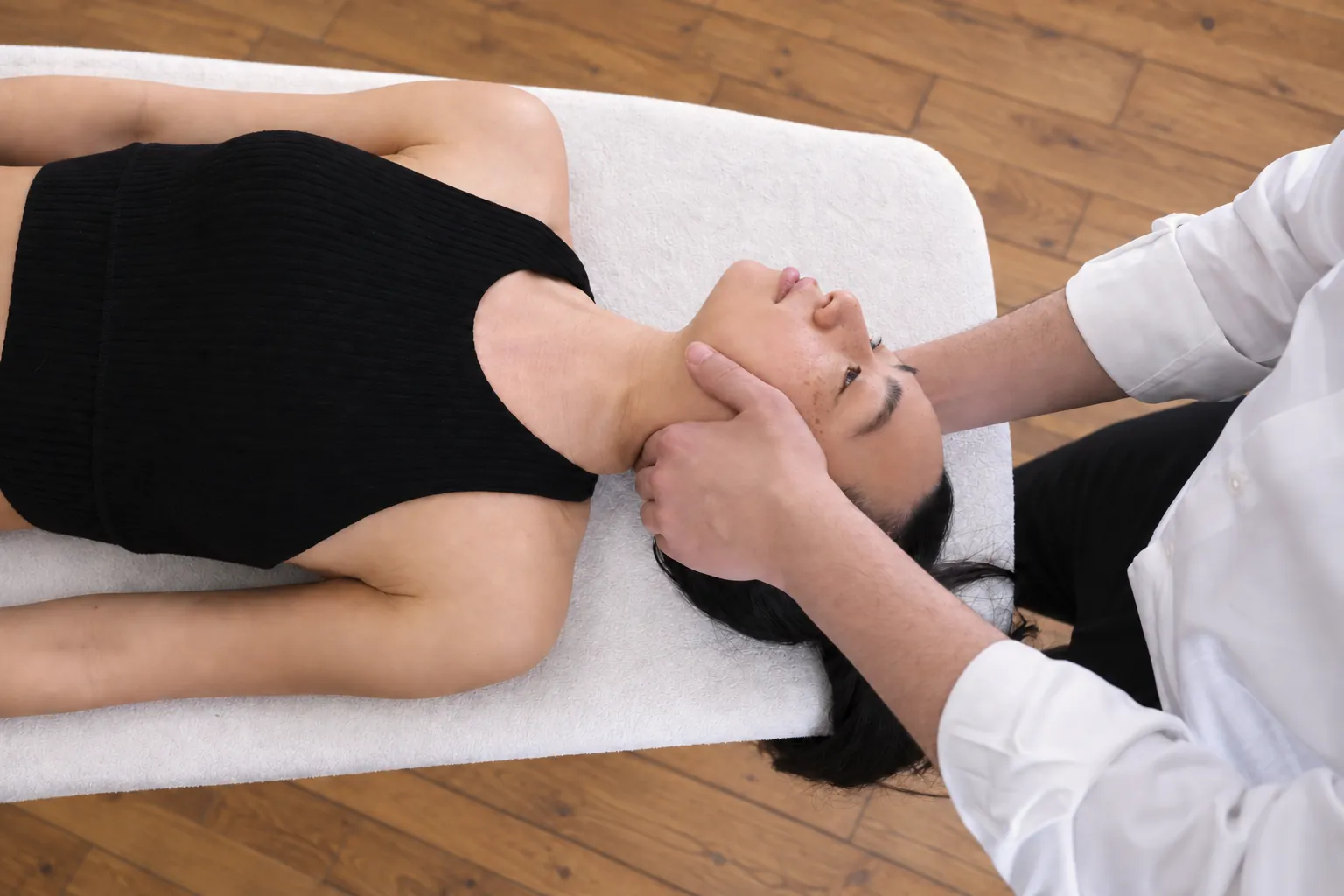
The cause was not in the gut. It was in the neck.
Understanding this means understanding why lasting relief comes from working back along the whole chain, rather than from treating the neck alone, the jaw alone or the ear alone. The work is to trace the problem back to its starting point, and to release the tension where it has taken hold for good.
Read the article: Morning stiff neck: what to do in the first few hours
Our approach
Our approach to pain in the head and neck
In our Paris 8 and Vitry-sur-Seine clinics, we apply the ASSAL Method, developed by osteopath Hosam ASSAL. Before treating your neck or jaw, we take the time to listen to your story. Much of the information that changes a diagnosis cannot be seen. It has to be told.
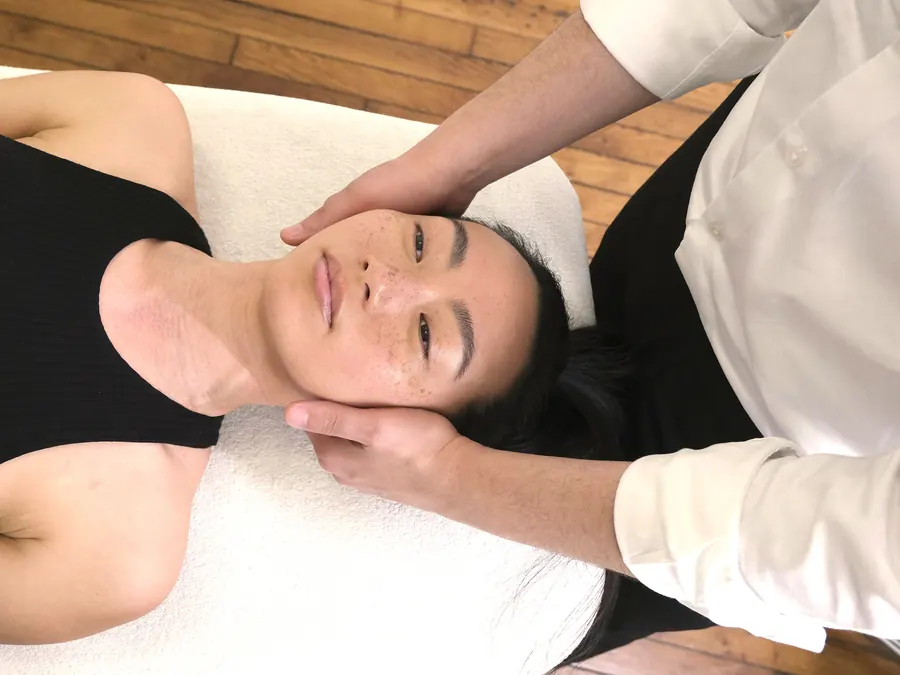
The case history, a key step
Have you had a car accident, even a long time ago? A fall? A broken nose? Surgery? A severe emotional shock? Are you being treated for high blood pressure or anxiety? These questions may seem far removed from your symptoms. In fact, they are essential for understanding where to look.
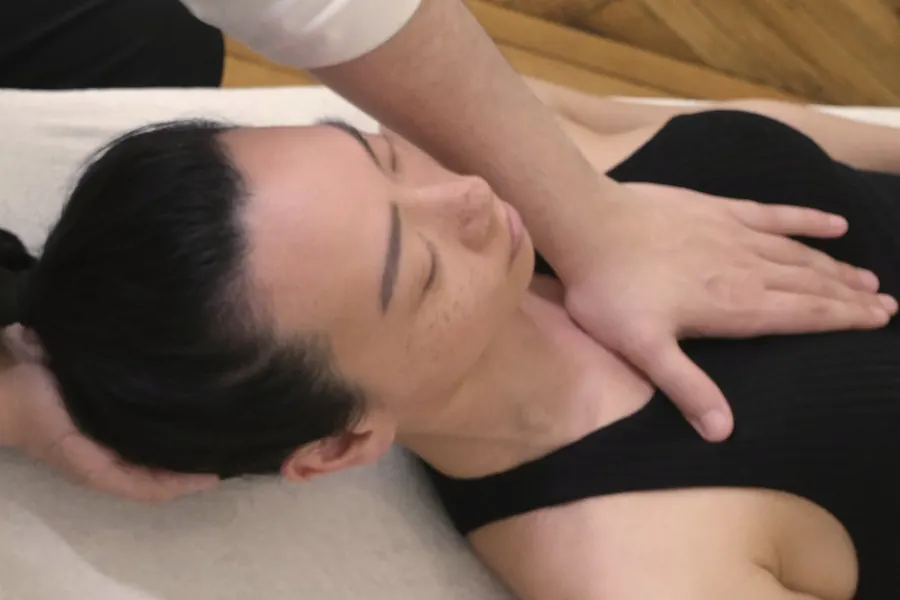
First, ruling out what needs a doctor
Before any treatment, we rule out serious causes. Dizziness, tinnitus and some headaches can be signs of conditions that lie outside the scope of osteopathy. If necessary, we refer you to your doctor before we treat you.
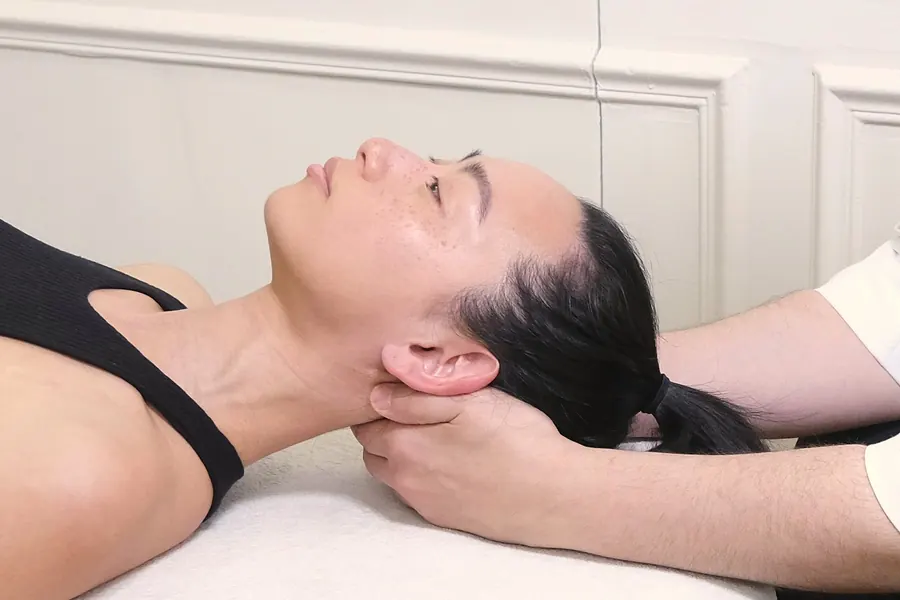
Gentle, gradual treatment
In this area, we always favour fascial techniques, which are gentle and involve no forceful manipulation, before considering a firmer mobilisation of the neck. And we always treat the whole axis, from the skull to the sacrum, rather than just the painful area.
Frequently asked questions
Frequently asked questions about migraines, dizziness and neck pain
I had a car accident ten years ago. Could it still be causing me problems today?
Yes, and it is actually common. Whiplash, an old broken nose or a fall can leave lasting tension, even if the site of the impact seems perfectly healed to you. The body compensated. But that compensation comes at a cost, which can show up years later as migraines, dizziness or neck pain with no apparent cause. It is one of the first things we explore in a consultation.
My tests are normal. Why am I in pain?
Imaging, whether MRI, CT scan or X-ray, looks for structural lesions. It is very good at that. But it is blind to functional problems: restricted mobility, tension in the fascia, imbalances between the eyes, the inner ear and the jaw, which all act as sensors. Much of the chronic pain in this area is functional, and that is precisely where osteopathy comes in.
I have been feeling dizzy since I changed my glasses. Is that possible?
Absolutely. The eyes, the inner ear and the jaw are what are known as postural sensors: they constantly tell your brain where your head is in space. When one of them changes suddenly, with a new prescription for your glasses, dental treatment or a prosthesis, the whole system has to reorganise itself. For some people, this reorganisation is difficult and produces dizziness, neck pain or migraines.
I am here for low back pain. Why are you touching my skull as well?
Because the skull and the sacrum are connected by a continuous sheath that runs the whole length of the spine. When this sheath is tight in one place, it pulls somewhere else. We regularly see chronic low back pain that resists every treatment because its origin actually lies in the skull. Treating this whole axis is often what makes the difference.
I have acid reflux and neck pain at the same time. Could there be a link?
Yes, it is a situation we see regularly in the clinic. The vagus nerve, which regulates digestion, emerges at the base of the skull just beside the first cervical vertebrae, then runs down to the stomach and intestines. When this part of the neck is chronically tense, the nerve can become irritated, which disrupts digestion. When patients come to us with acid reflux that persists despite their treatment, unexplained bloating, or palpitations even though their heart tests are reassuring, the real problem is sometimes mechanical, at the base of the skull.
When do you refer patients to a doctor?
Regularly, and this is important. Some cases of dizziness, tinnitus or headache can signal a cause that needs a doctor’s opinion first. That is why the first part of the consultation is about ruling out these causes. If necessary, we refer you to your doctor or to the relevant practitioner before any treatment.
How many sessions will I need for migraine or chronic neck pain?
Every body has its own pace, and the number of layers to release varies from one person to the next. What is different with this approach is that you see the change during the session itself, thanks to the ASSAL test, repeated after each treatment. Of all the areas under tension, this test looks for the one that came first. So you know where you stand, session after session, rather than waiting several weeks to judge.
Where should I go: Paris 8 or Vitry-sur-Seine?
Both clinics apply the same method. The Paris 8 clinic is at 32 avenue de Friedland, near Charles de Gaulle Étoile. The Vitry-sur-Seine clinic is at 11 rue Corneille. Simply choose the one that is easier to reach from your home or workplace.
See an osteopath in Paris 8 or Vitry-sur-Seine
If you recognise yourself in this page, a consultation will help us understand the real origin of your symptoms and respond in a way that fits your history.
More of what we treat
Explore what else we treat
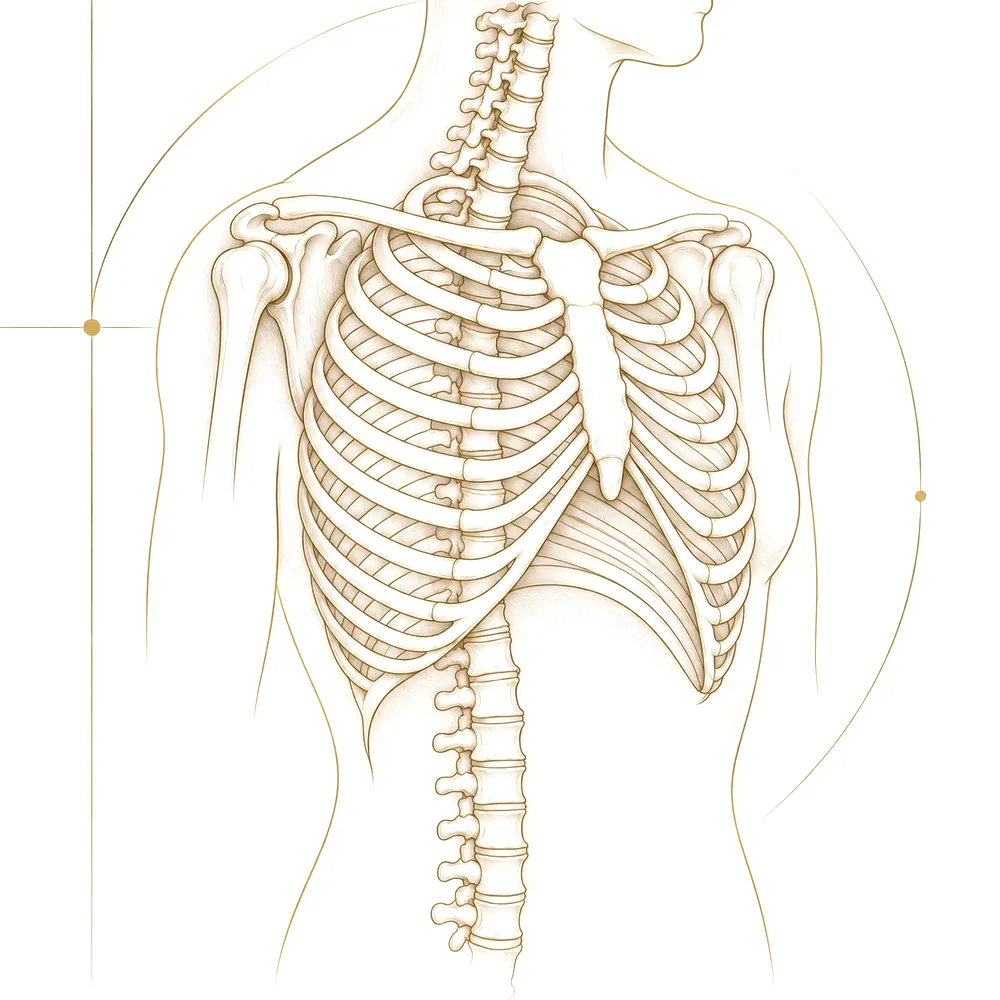 Back, chest and digestionReflux, pain between the shoulder blades, chest tightness, bloating and rib pain.
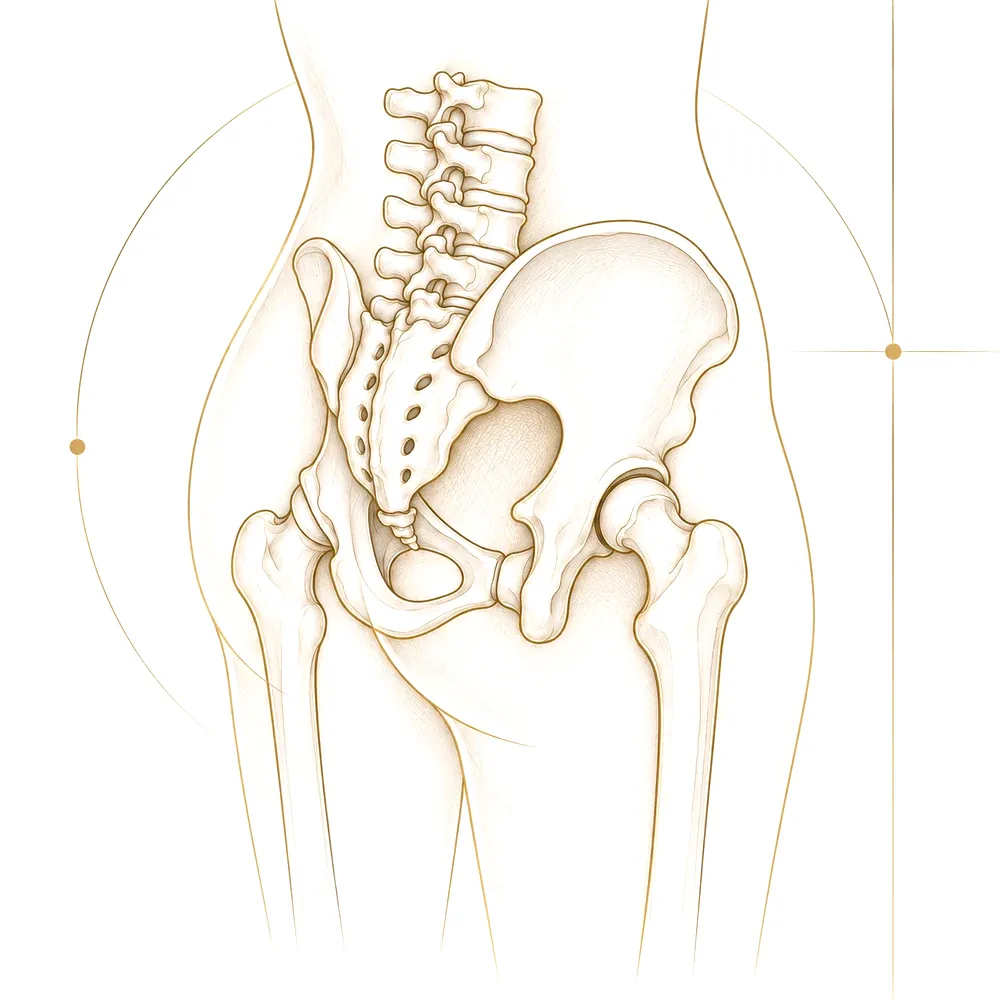 Lower back, pelvis and lower abdomenLow back pain, sciatica, herniated disc, sacroiliac pain, pelvic pain and recovery after childbirth.
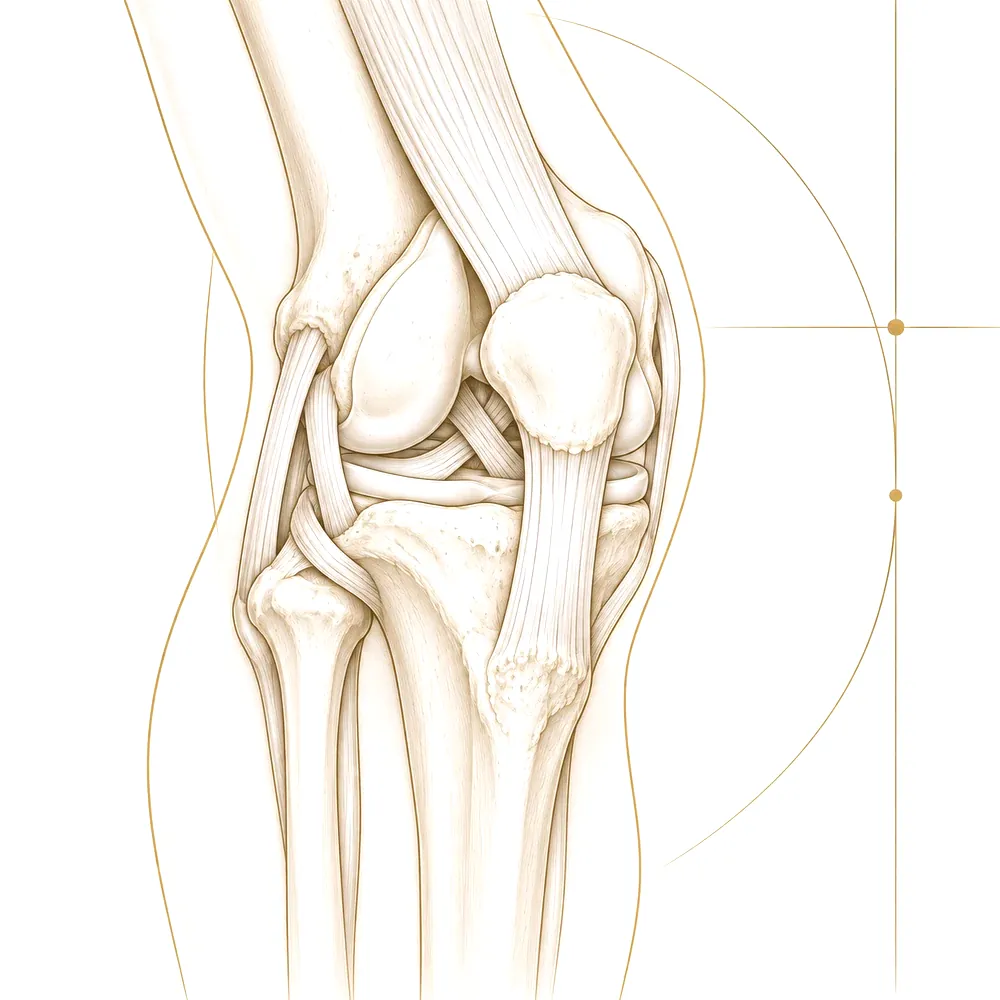 Joints and tendinitisShoulder, elbow, wrist, hip, knee, ankle. Tendinitis, sprains and pain that won’t go away.
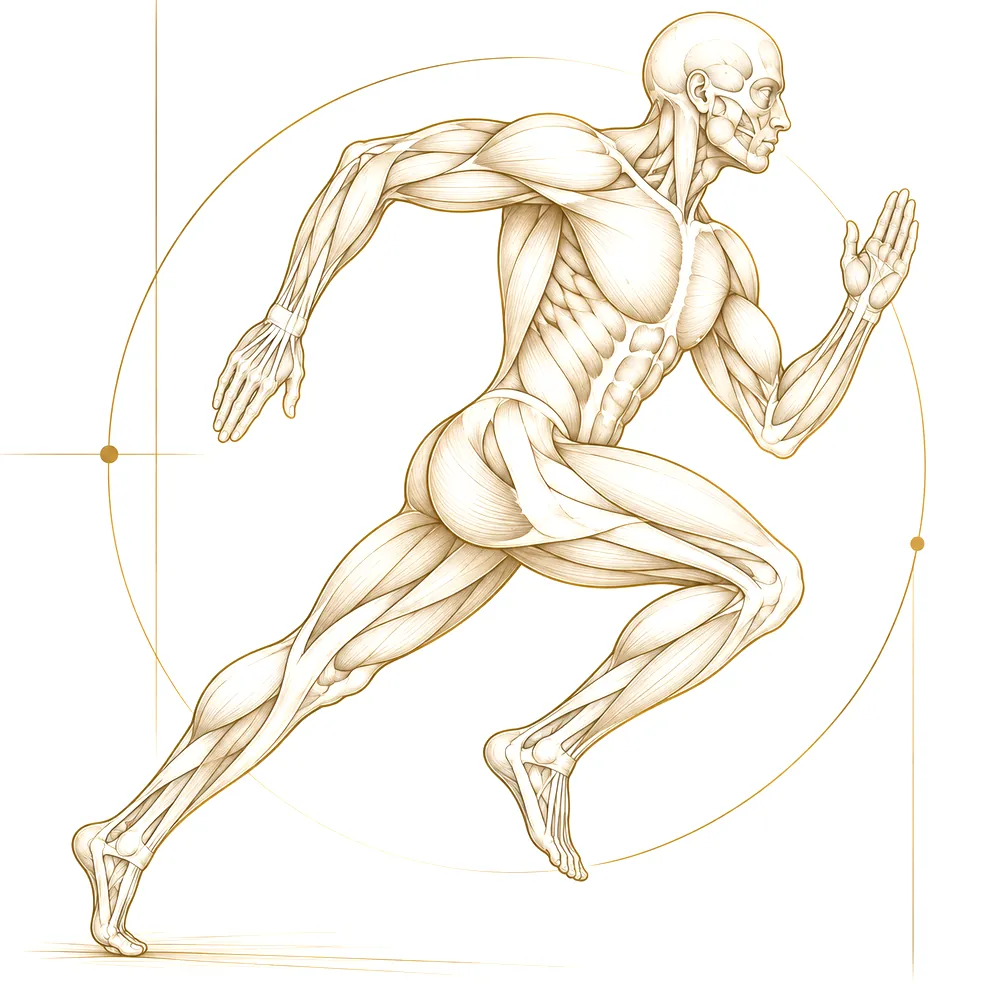 Sports osteopathyRecurring tendinitis, repeated sprains, muscle tightness, returning to sport after an injury.
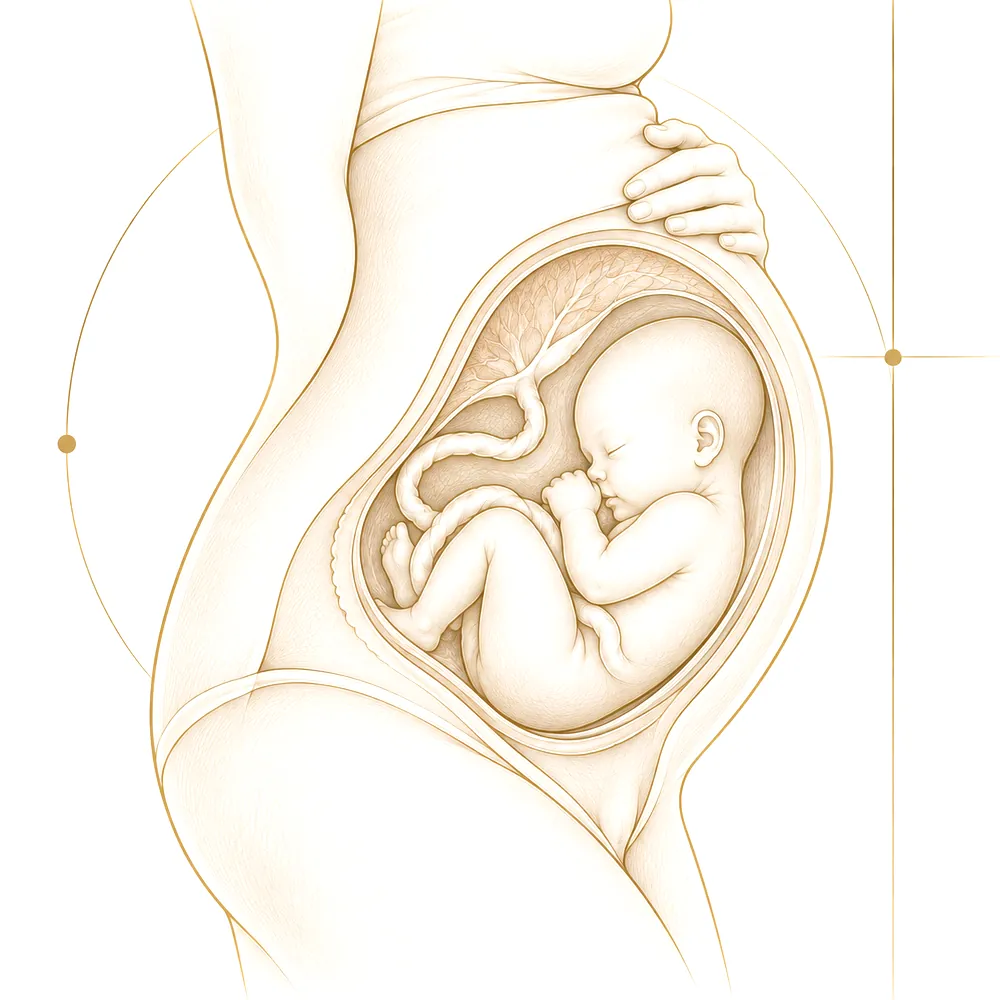 Pregnancy and postpartumBack pain, sciatica, pubic pain during pregnancy, a pelvis that has not recovered since the birth.
 BabiesHead always turned to the same side, a flattening skull, feeding difficulties, crying. From the first month.