
Morning stiff neck: what to do in the first few hours
You woke up with your neck locked, unable to turn your head. What happens in the next few hours determines whether the episode lasts two days or two weeks. Here is what helps, what makes it worse, and the signs that should send you to a doctor without delay.
If in doubt, start here
Before any advice, a word on safety. The vast majority of morning stiff necks (torticollis) are not serious, but a few situations call for immediate medical advice.
Call your doctor or 15 (French emergency medical services) if your neck stiffness comes with fever, a severe headache or vomiting. If you find it hard to bring your chin down towards your chest and your neck resists in every direction. If you feel pins and needles in an arm, loss of strength in a hand, or problems with your vision or balance. Or if the pain started after a blow, a fall or a car accident.
In these cases, this article stops here for you. Seek medical advice first.
For everyone else, here is what you need to know.
What happened during the night
A stiff neck is a muscle that has decided to stop you moving.
While you slept, your neck stayed for several hours in a position your muscles did not tolerate well. A pillow that is too thick or too flat, a night on your front with your head turned as far as it will go, an open window that let your neck get cold. Sometimes none of these: just a neck that had already been tense for weeks from stress or hours in front of a screen, and that finally gave way in the night.
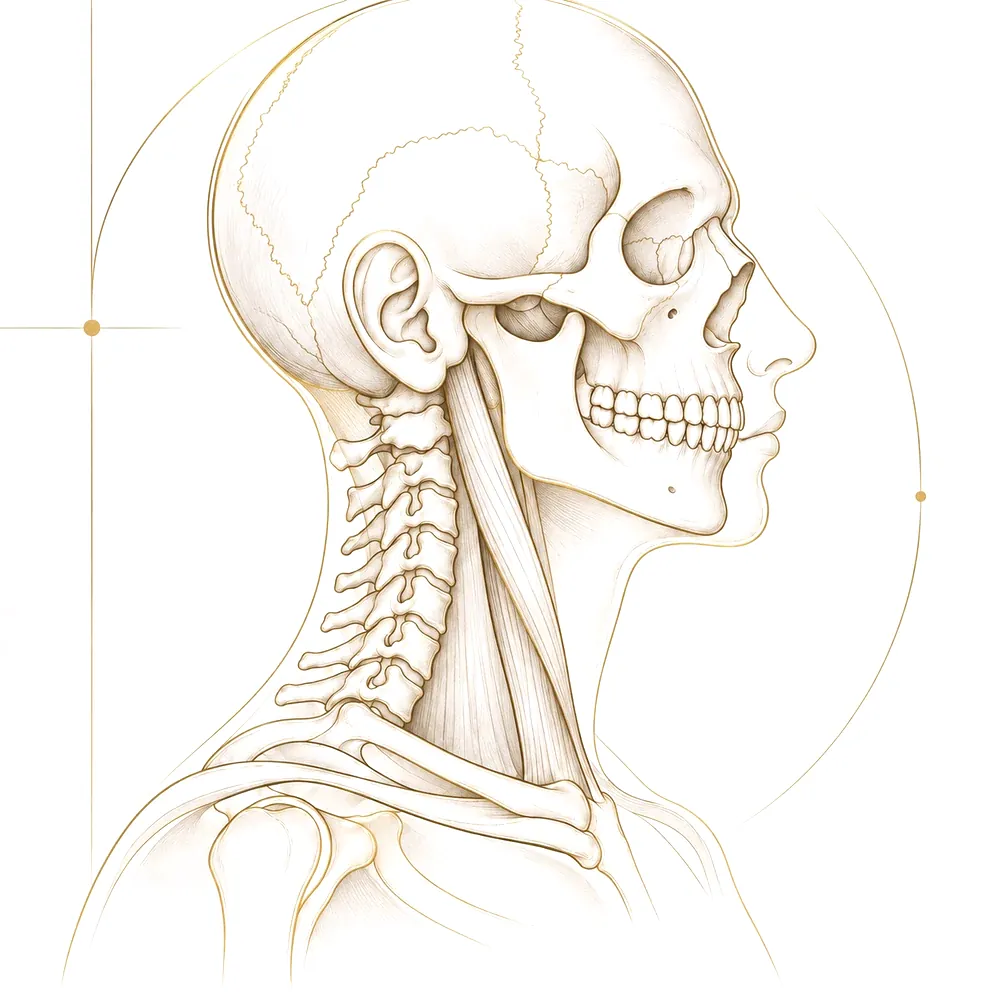
Your body then did what it always does when faced with a strain it sees as a threat. It locked up. The muscle that runs from behind your ear to your collarbone, along with the muscles of the upper back, contracted to block movement.
This reaction is protective. It is also out of proportion, and it is this reaction that hurts, far more than the original cause.
The first few hours: what helps
Move, but only as far as is comfortable.
This is the most important piece of advice, and the most counter-intuitive. You want to keep your neck completely still, and that is exactly what you should avoid.
Complete immobility is the best way to make a stiff neck last.
Instead, look for the range of movement in which you feel no pain, however tiny it is, and move slowly within it. Small turns of the head, very small movements of the ear towards the shoulder, repeated several times a day. Moving within your comfort range tells your nervous system that the area can be used, and that helps it lower its guard.
Apply heat.
For a tight, contracted muscle, heat is your best ally. It relaxes the muscle fibres and improves local circulation. A hot-water bottle, a heat patch or a hot shower aimed at the back of your neck, for about a quarter of an hour, several times a day. Protect your skin and avoid falling asleep on it.
Cold has its place in one specific case: if your stiff neck follows a recent, violent awkward movement, with sharp pain and swelling. In that situation, cold calms the inflammatory reaction better during the first two days.
If in doubt, try heat first. When you wake up with a locked neck and there has been no injury, heat is almost always what does the job.
Find a position that takes the weight off your neck.
Lie on your back with a thin pillow or a rolled-up towel under your neck rather than under your head. In this position, your neck no longer carries the weight of your head, and the muscles can finally stop working. A few minutes are enough to feel a difference.
Painkillers have their uses.
A simple painkiller can help you move, and moving is part of the treatment. Follow the dosage instructions and ask your pharmacist for advice, especially if you are taking other medicines.
What to avoid
Cracking your neck yourself. It is the most tempting reflex and the riskiest. You control neither the direction, nor the speed, nor the structure you are putting under strain. On a neck already in spasm, it can make the spasm worse and, in rare cases, cause a serious injury. This kind of manipulation is not something to improvise.
Wearing a neck collar all day. Prolonged immobilisation sustains the very thing you want to get rid of. Muscles kept at rest lose their tone, and stiffness sets in. If a collar has been prescribed for you, wear it for as long as you were told. If not, do without it.
Forcing your way back to full movement. Pushing into pain to get the movement back reinforces the protective reflex. You will get the opposite of what you are looking for.
Waiting and hoping it will go away on its own. A stiff neck often clears up by itself, but the first few days count. Doing the right things makes the episode much shorter.
How long will it last?
An ordinary stiff neck follows a fairly predictable course. The pain is at its worst on the first day, sometimes the second, then it eases. Most episodes clear up within a few days, usually in less than a week.
If your stiff neck lasts more than a week without clear improvement, if it gets worse, or if it keeps coming back, you need to look beyond the episode itself. A neck that locks several times a year does not lock by chance.
Why get treatment, and when
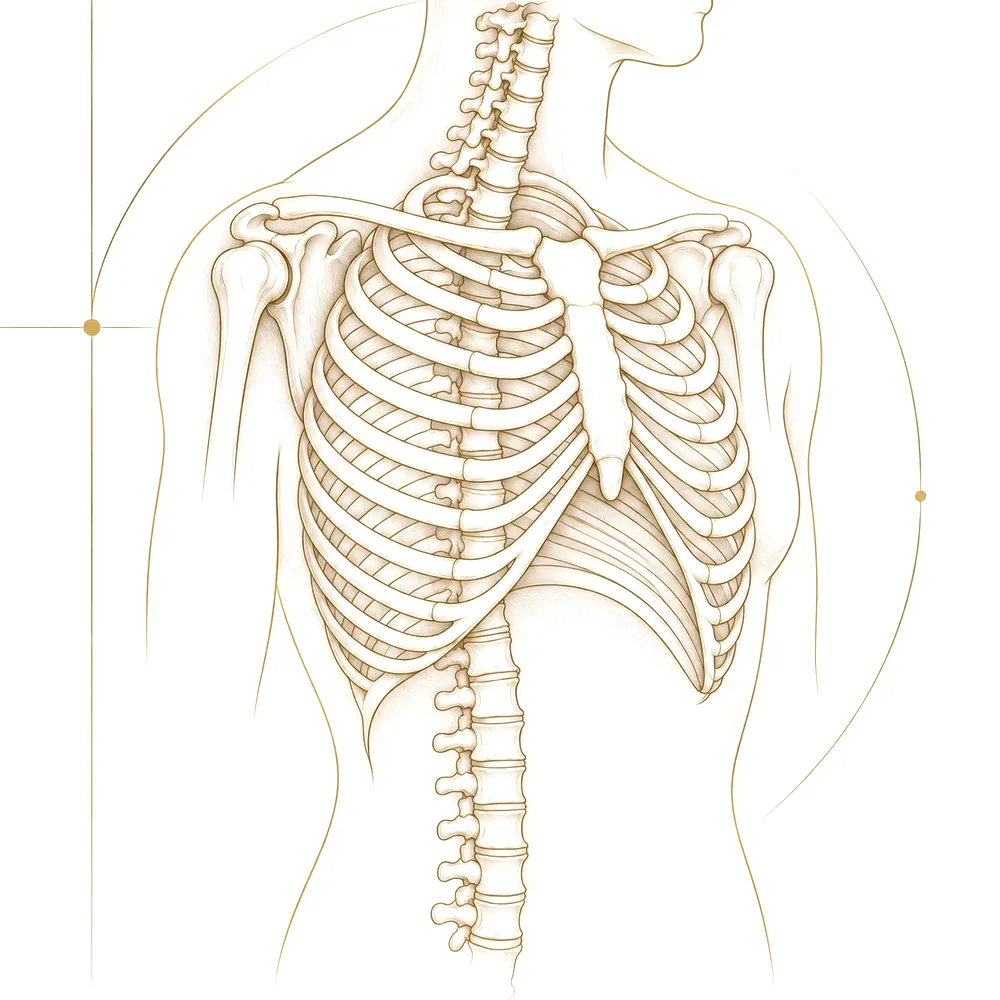
An osteopath can help from the very first days. The work involves releasing the spasm and restoring mobility to the areas that have locked up, often beyond the neck itself: the upper back and the first ribs are almost always part of the picture.
The advantage of being seen early is simple. The longer the locking lasts, the more compensations the body builds around it, and the longer it will take to untangle everything.
Getting treatment is even more worthwhile when the episodes keep coming back. A one-off stiff neck after a bad night is simply a mishap. Three episodes in a year point to something else: a neck that is already working under constant tension, often because an area further down has stopped doing its share. In that case, treating the neck alone amounts to repeating the same temporary relief.
Stopping it from happening again
Check your pillow. It should fill the space between your head and the mattress without pushing your neck up or letting it kink. If you sleep on your side, it should be thicker than if you sleep on your back.
Avoid sleeping on your front. This position forces your neck to stay turned as far as it will go for hours. It is the most common cause of waking up with a locked neck.
Look at your workstation. A screen that is too low means you spend your days with your head tilted forward, which multiplies the load on your neck. The top of the screen should be at eye level.
Move regularly during the day. No posture is bad in itself; it is how long you hold it that causes problems. A neck that changes position every half an hour tightens up much less.
And keep an eye on how tense you are. The neck is one of the first places where stress settles in physically. A stiff neck that comes on during a busy period is no coincidence.
In short
Move gently within what does not hurt, apply heat, lie down in a position that takes the weight off your neck, and otherwise leave it alone. Avoid cracking it or immobilising it. Seek medical advice without delay if you have a fever or pins and needles, or if the pain follows a blow. And if the episodes keep coming back, look further down than the neck.
Find the origin of your pain
A consultation helps you understand where your pain really comes from, and how to address it, taking your history into account.