
What should you do after an osteopathy session?
You walk out of your session. On the way home, the questions start. Is it normal to still be in pain? Can you go for a run tomorrow? When should you come back? Here is what I tell my patients at the clinic, and the signs that cannot wait.
In short
After an osteopathy session, temporary tiredness, aches or mild discomfort are possible: they appear in the hours that follow or the next day, then ease day by day and usually pass within two to three days. Keep moving as usual, drink enough, avoid strenuous exercise on the same day and ease back into sport over the following days. If the pain gets worse instead of easing, tell your osteopath or see your doctor; if you have a fever, see a doctor without delay, and if you lose strength, have problems passing urine or notice any sign of a stroke, call 15 (French emergency medical services).
You left the clinic feeling lighter. Then, in the evening, tiredness hit you all at once. Or the next morning, an ache appeared in your upper back, when you had come in for your neck. And the same question keeps going round in your head: did something go wrong?
Most of the time, no. Your body carries on working for a few days, and it does not always do so quietly.
Is it normal to still be in pain after an osteopathy session?
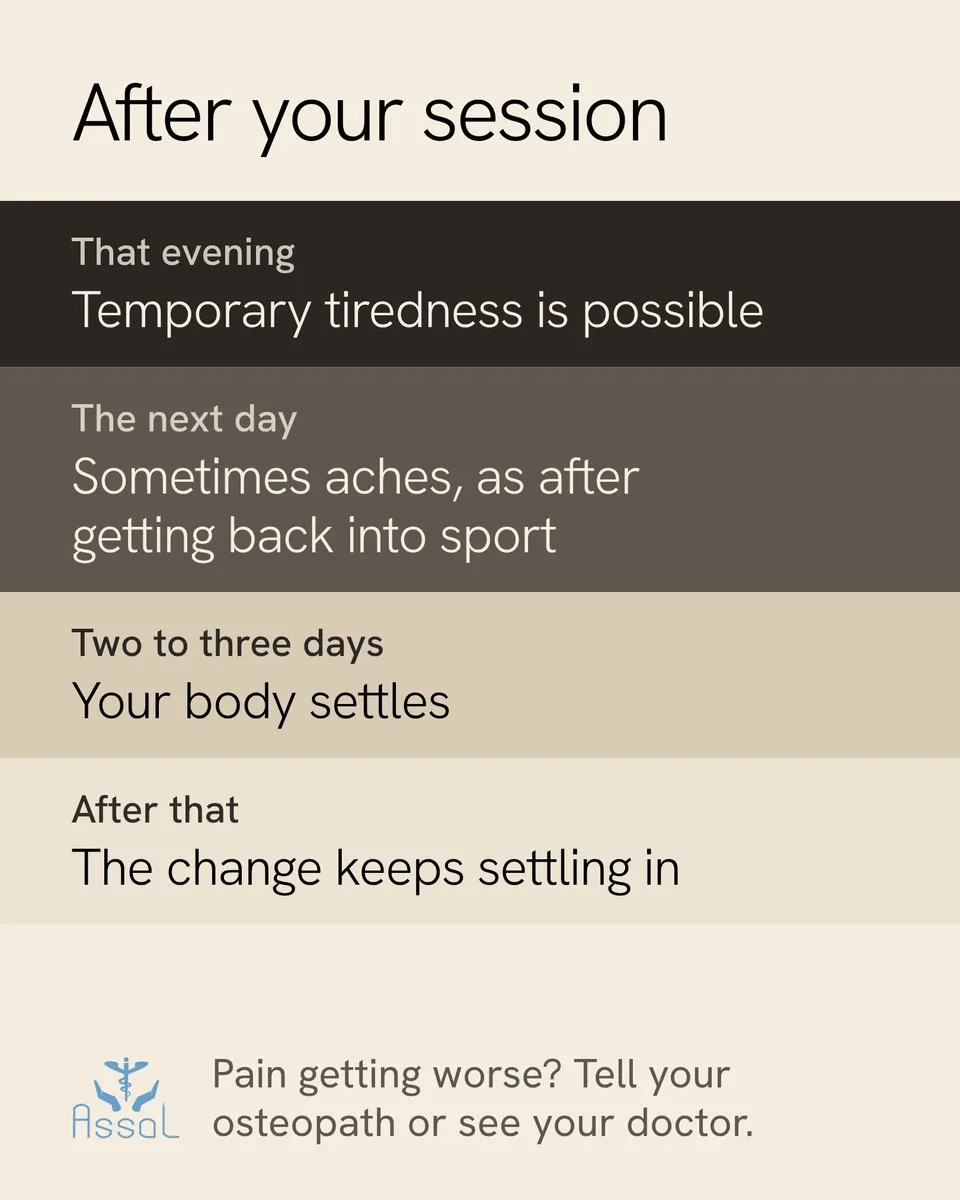
Yes, if the discomfort stays mild and eases day by day. Stiffness or aches the next day, as after getting back into sport: these mild side effects are possible. This is what some people call the “rebound effect”. Pain that keeps getting worse over the following days is not one.
At the end of a session, one patient put it in her own words: “I feel much lighter. I can still feel it pulling a little, but it’s much less than at the start.” I told her what I am telling you today: it is normal. During the session, we released tensions that your body had sometimes been carrying for years. It now has to reorganise itself without them.
Sometimes discomfort also appears in a place that did not hurt when you arrived. If it feels like an ache and eases over the following days, there is nothing to worry about: the areas that were compensating are reorganising too. Pins and needles, loss of strength or fever are another matter: see the box further down.
Why do you feel tired after seeing an osteopath?
Because the session moves your nervous system from alert mode to recovery mode. At first, many patients are tense: the stomach tightens, the neck stiffens, breathing stays high in the chest. Then, little by little, the breathing settles and the eyes close. Some almost fall asleep on the table.
At the end of the session, I make sure you leave neither knocked out nor over-excited. This relaxation can still carry on, though, and temporary tiredness that evening is possible. If you can, don’t plan anything demanding for that evening.
Why do people sometimes cry at the osteopath?
Because the body sometimes lets go of what it was holding back. It happens. You don’t have to apologise for it. When we work on the upper abdomen, under the ribs, tears can well up. Sometimes laughter, sometimes both. It is more common in people who carry a lot of anxiety, or who are going through a difficult time. It is a normal reaction: I explain it to you simply, and we let it pass.
How long does it take to recover from an osteopathy session?
Allow two to three days. That is the time your body needs to settle, even after a very good session.
A mild headache, possible especially when the neck has been worked on, usually passes within the day. If it lasts, talk to your doctor. If it is sudden, severe and unusual, call 15 straight away.
During those two or three days, listen to your pain: it tells you where you are. If it gets worse instead of easing, don’t let it drag on: I come back to this below.
An ache that eases, even slowly, is heading in the right direction.
What should you avoid after an osteopathy session?
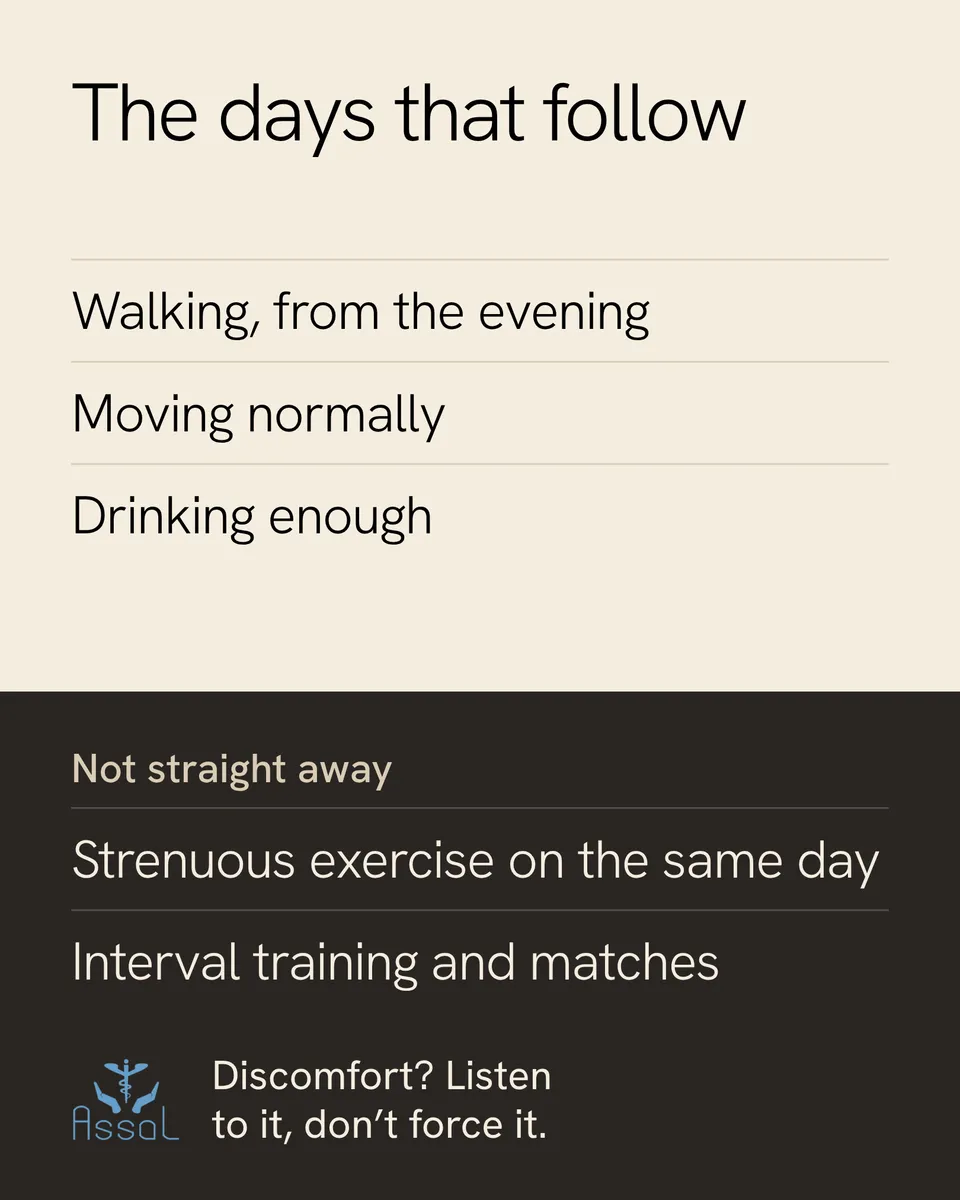
Above all, strenuous exercise on the same day. For the rest, there is no need for strict rest or to stay lying down: move normally. Walking does you good from the evening. Drink enough, as you would after an active day. And if discomfort comes up, listen to it rather than forcing. For a painkiller, ask your pharmacist or your doctor for advice: it is not the osteopath’s role to prescribe one.
To get home, there is generally nothing to stop you from driving. If you feel dizzy or drowsy when you get up from the table, stay seated for a few minutes and tell us before you leave.
Can you exercise after an osteopathy session?
Yes, gently. On the same day, avoid strenuous exercise. Over the next two or three days, build up gradually: an easy jog or a few lengths without a stopwatch are still fine. Interval training and matches can wait.
Preparing for a competition? Don’t book the day before. Plan your session at least a week ahead, so that your body has settled by the big day. Our Sports osteopathy page explains how we support athletes, in Paris 8 and in Vitry-sur-Seine.
When do you feel the benefits of an osteopathy session?
Some patients feel them on the table. Many notice, in the hours and days that follow, a body that moves more freely and feels more comfortable. Before you get up, I repeat the ASSAL test with you, a test I developed: you see for yourself what has changed.
The ASSAL Method
The ASSAL Method is the approach we apply in our clinics in Paris 8 and Vitry-sur-Seine, developed by Hosam ASSAL, osteopath. It relies on the ASSAL test. Of all the areas under tension, this test looks for the one that came first, and you see the result at the same time as we do.
The change then keeps settling in. At the next appointment, my patients tell me in simple words: “My body kept working after the last session.” I see it too. The aches pass within a few days, but your nervous system keeps integrating what has changed, sometimes for several weeks.
Are you in Paris or the Val-de-Marne, and does a pain keep coming back despite everything you have tried? Before treating, we look for where it begins. Book an appointment in Paris 8 or Vitry-sur-Seine.
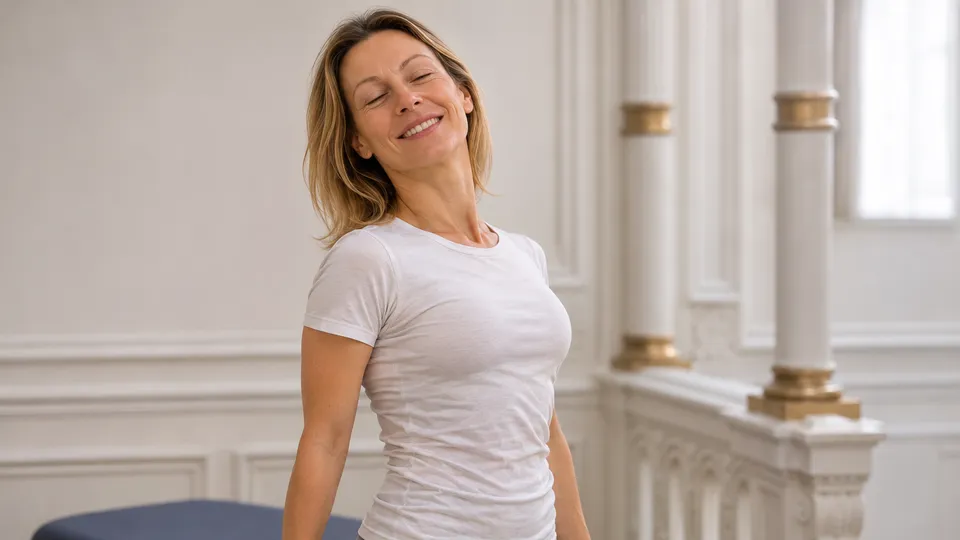
When should you worry after an osteopathy session?
If the pain gets worse instead of easing, if it does not improve after a few days, or if a different kind of symptom appears, tell your osteopath or see your doctor. The simplest guide: a normal reaction appears in the hours that follow or the next day, then eases day by day.
In our article on the first consultation, I told you about a patient who came in with a very painful hip after a fall. With her, I followed this same guide from the very first day. Her pain was too strong to be worked on, so I stopped. I asked her to rest and to come back only once the pain had started to ease. If it did not improve, she was to see her doctor. The pain soon receded.
These signs can’t wait
Call your doctor without delay if a fever develops, or if pins and needles or numbness gradually set in, in an arm or a leg.
Go to the emergency department or call 15 if an arm or a leg loses strength, if the skin between your thighs, around the genitals or the anus becomes less sensitive, if you have difficulty passing urine, leaks, or if you can no longer control your bowels.
Call 15 or 112 straight away in case of a drooping mouth, a face, an arm or a leg that suddenly becomes weak or numb, difficulty speaking or understanding, vision that suddenly dims or doubles, a sudden, severe and unusual headache, or a sudden loss of balance. Even if these signs disappear after a few minutes.
Apart from these signs, for a simple question after your session, send us a message on WhatsApp: we would rather have one question too many than a worry that lingers.
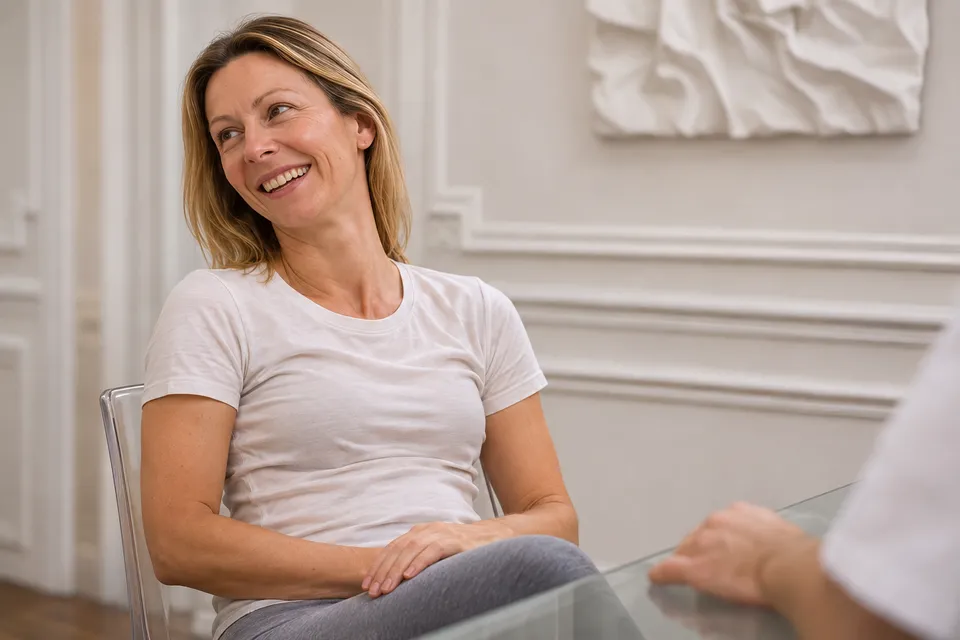
Do you need a second session, and when?
Yes, always, to check how your body’s adaptation is progressing and to act preventively. After acute pain, this second session takes place one week to ten days later: I check what has held and what is coming back. When the pain has been there for years, several are needed, because tensions are released layer by layer. At the following sessions, the work goes further, because your body has integrated the previous session.
Take, for example, the patient with the painful hip. When she came back, ten days after her first visit, her pain had eased. The session could go ahead without hurting her. As she left, she wanted another appointment as soon as possible. I explained that her body first needed time to integrate the session: the next one would be in three weeks. She understood, and she followed the advice.
Bringing sessions closer together speeds nothing up.
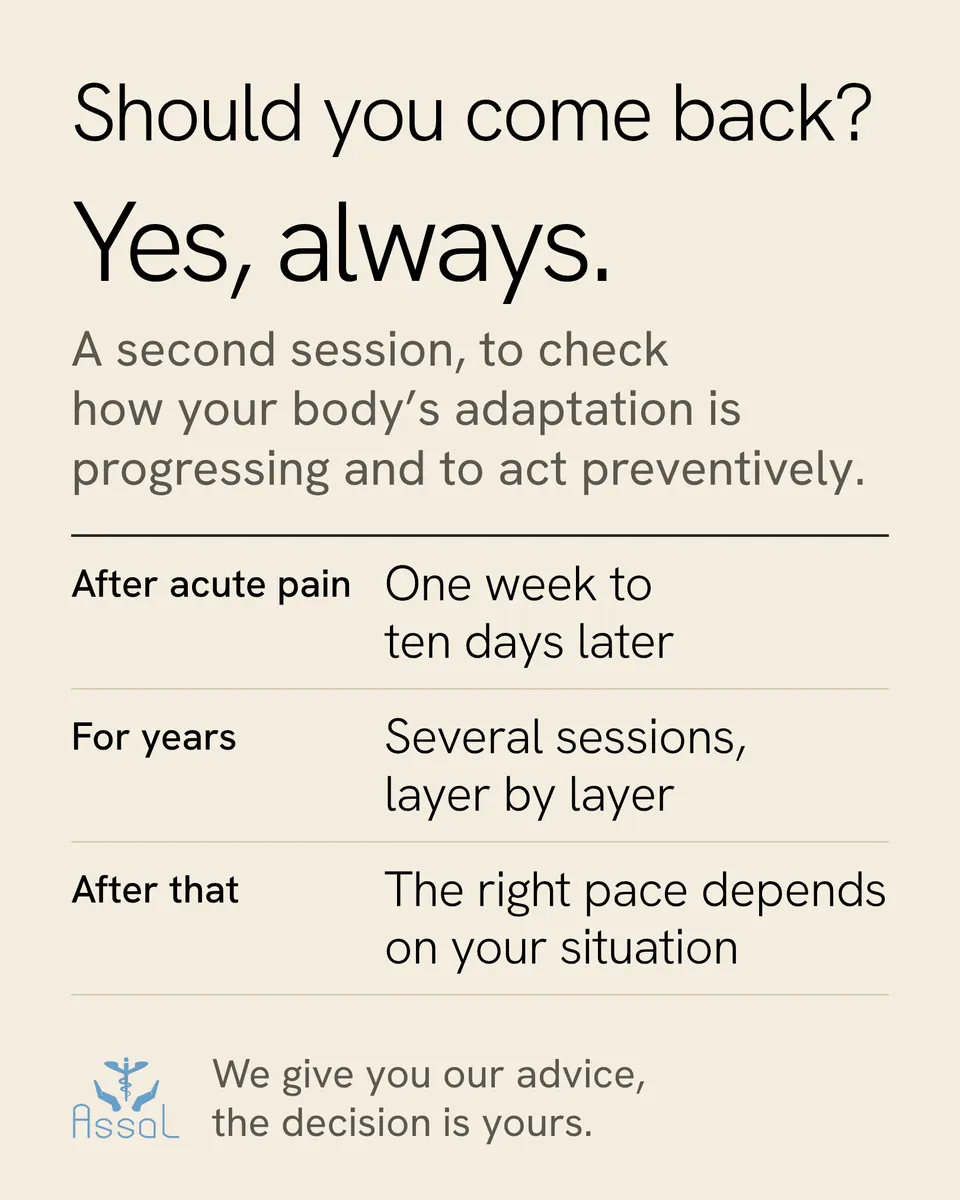
The right pace depends on your situation. As you leave, we give you our advice on what comes next, and the decision is yours.
For your next session, you can book directly online, Monday to Sunday. Can’t find a slot that suits you? Send us a message on WhatsApp at +33 6 51 77 41 86: tell us in a sentence what is happening and when you are available, and we will look for a solution.
What if you are still in pain a month later?
Talk to your osteopath and to your doctor. Reactions to a session pass within a few days: pain that is still there a month later is no longer a reaction. With us, it means that we have missed a lead, or that your situation calls for a different perspective. When the same discomfort keeps coming back from one session to the next, in the same place, it is sometimes the signal that another professional needs to take over on that specific point: a podiatrist, an orthoptist, a dentist, or your doctor. We tell you, and we refer you.
When things improve, some patients take the time to write about it.
“A very good practitioner, attentive and effective. I felt a real improvement after the session.”
Zineb, patient of Hosam ASSAL in Paris 8 (translated from French)
In Paris 8 as in Vitry-sur-Seine, we take the time to explain what is happening, during the session and afterwards. Book online, Monday to Sunday:
In Paris 8, with me or with Michaël.
In Vitry-sur-Seine, with me or with Amine.
Prefer to call? +33 1 44 09 95 80 for Paris 8, +33 1 75 37 53 41 for Vitry-sur-Seine.
A session is also judged by the days that follow.
About the author
Hosam ASSAL is an osteopath (French Diploma in Osteopathy, D.O.), trained at the École Supérieure d’Ostéopathie de Paris, and has been in practice for more than ten years. Founder of the ASSAL Method, he sees patients in Paris 8 and Vitry-sur-Seine, alongside Michaël Vallée Kallézis and Amine Medjaoui. He also teaches his method to osteopaths and to final-year osteopathy students.
What we treat
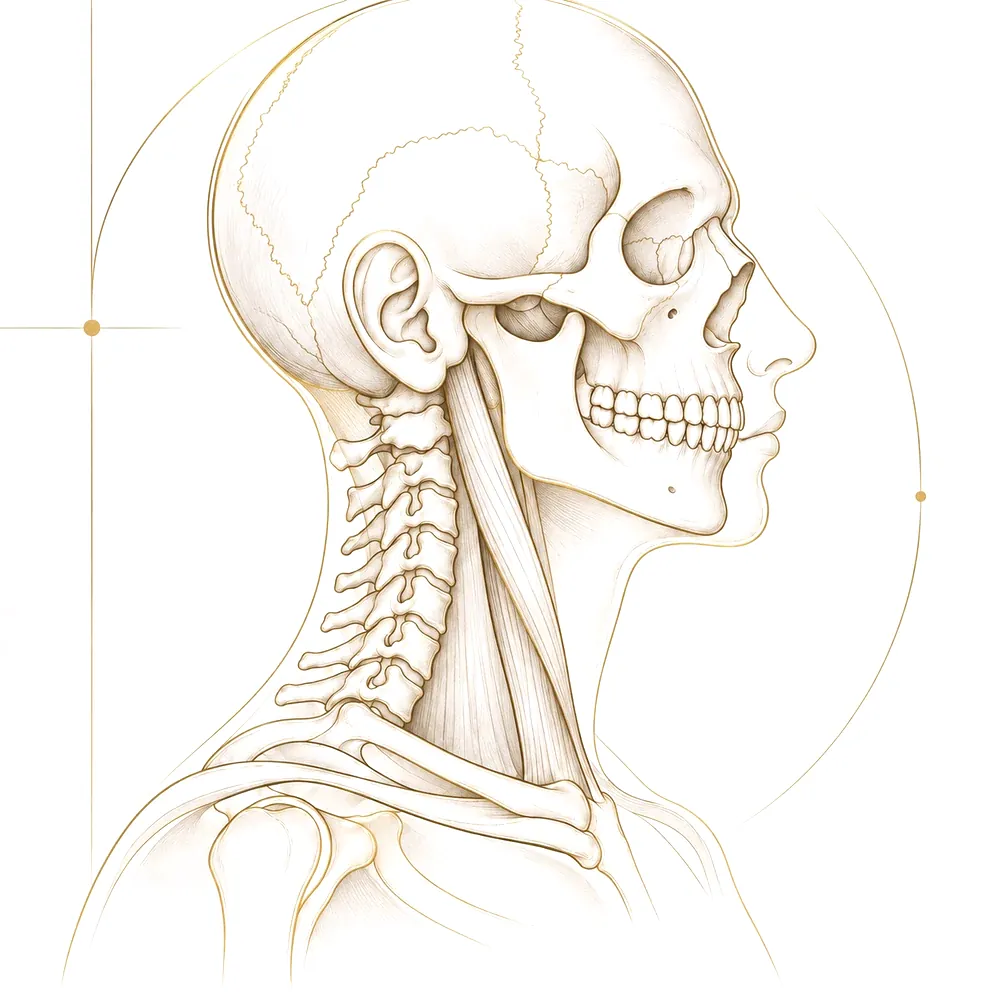
Head, neck and jaw
Migraines, neck pain, dizziness, tinnitus, jaw locking, neuralgia, after-effects of neck injuries.
Learn more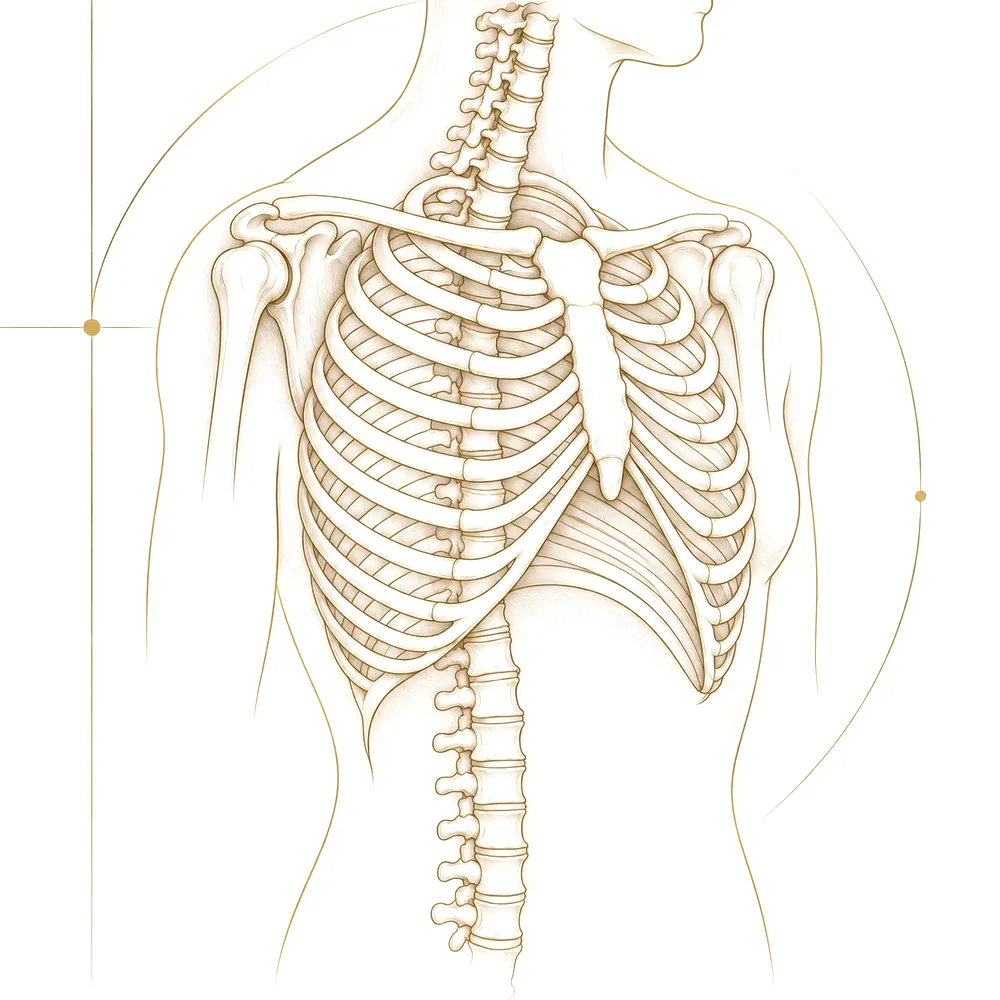
Back, chest and digestion
Reflux, pain between the shoulder blades, chest tightness, bloating, rib pain.
Learn more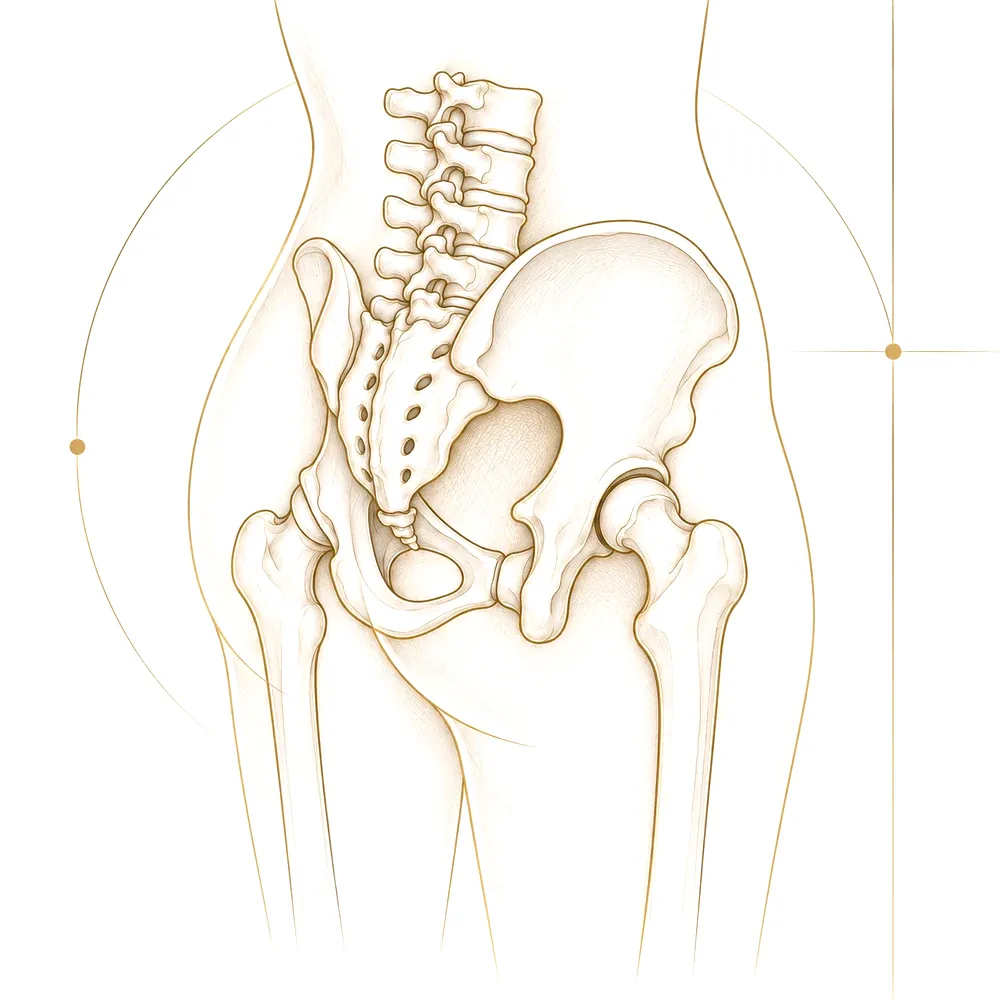
Lower back, pelvis and lower abdomen
Low back pain, sciatica, herniated disc, sacroiliac pain, pelvic pain, recovery after childbirth.
Learn more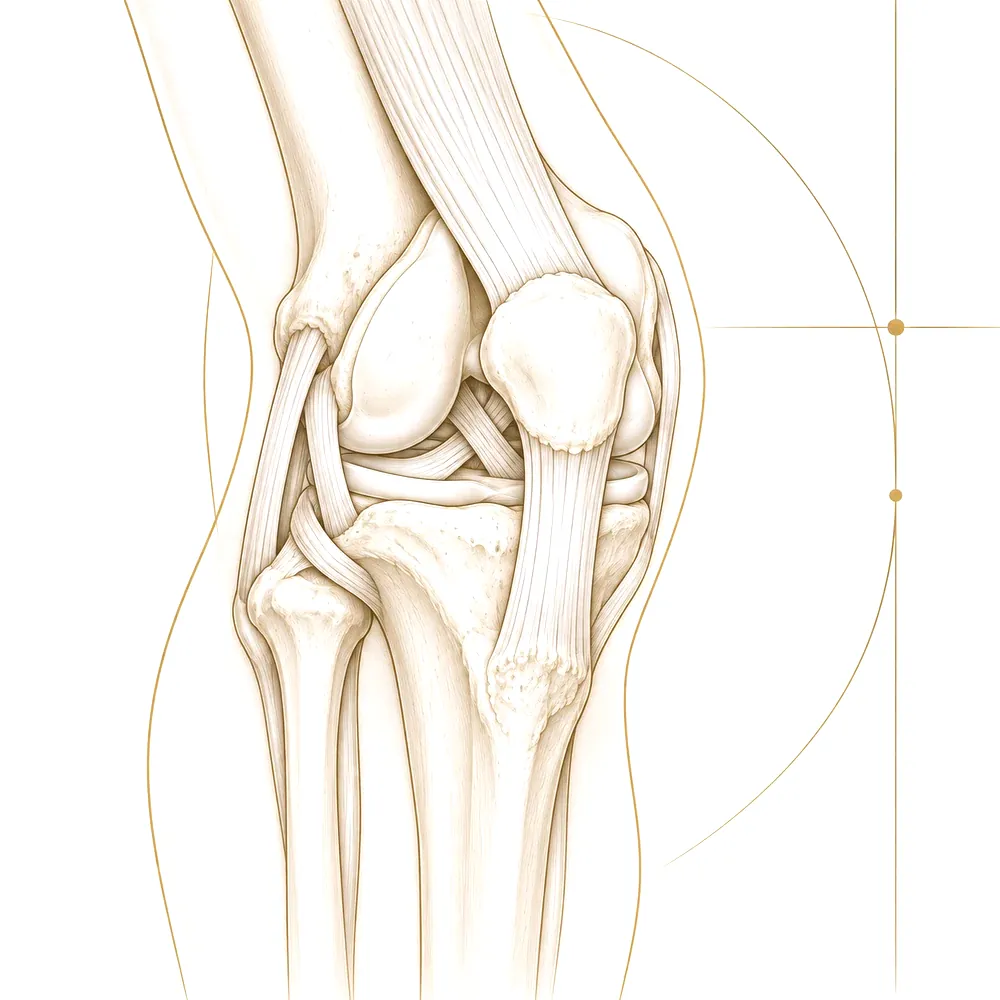
Joints and tendinitis
Shoulder, elbow, wrist, hip, knee, ankle. Tendinitis, sprains and pain that won’t go away.
Learn moreFind the origin of your pain
A consultation helps you understand where your pain really comes from, and how to address it, taking your history into account.